Free tool · Vocabulary list, flashcards and test
JFT Basic vocabulary list with meaning and audio
This JFT Basic vocabulary list has 554 everyday words in 14 life topics, from shopping and transport to work and safety, each with its reading, meaning and audio. Study them with flashcards that remember what you know, check yourself with a quick vocabulary test, or print the list as a PDF. It's our own list, not an official one.
Showing 554 of 554 words
Self & family 39
- 家族かぞくfamilynoun
家族は四人です。
There are four people in my family.
- 父ちち(my) fathernoun
- 母はは(my) mothernoun
- お父さんおとうさんfather (someone's)noun
- お母さんおかあさんmother (someone's)noun
- 兄あに(my) older brothernoun
- 姉あね(my) older sisternoun
- 弟おとうとyounger brothernoun
- 妹いもうとyounger sisternoun
- 兄弟きょうだいbrothers and sistersnoun
- 両親りょうしんparentsnoun
- 夫おっと(my) husbandnoun
- 妻つま(my) wifenoun
- 子どもこどもchildnoun
子どもが二人います。
I have two children.
- 赤ちゃんあかちゃんbabynoun
- 友だちともだちfriendnoun
週末、友だちと会います。
I'm meeting a friend at the weekend.
- 名前なまえnamenoun
お名前は何ですか。
What is your name?
- 歳さいyears oldnoun
- 誕生日たんじょうびbirthdaynoun
誕生日はいつですか。
When is your birthday?
- 国くにcountry; home countrynoun
国はネパールです。
My country is Nepal.
- 出身しゅっしんhometown, where you are fromnoun
インドネシアの出身です。
I'm from Indonesia.
- 結婚けっこんmarriage (する: to get married)noun
姉は去年結婚しました。
My older sister got married last year.
- 独身どくしんsingle, unmarriednoun
- 自己紹介じこしょうかいself-introductionnoun
- 住所じゅうしょaddressnoun
ここに住所を書いてください。
Please write your address here.
- 電話番号でんわばんごうphone numbernoun
- 男性だんせいman, malenoun
- 女性じょせいwoman, femalenoun
- 男の人おとこのひとmannoun
- 女の人おんなのひとwomannoun
- 外国人がいこくじんforeignernoun
- 日本語にほんごJapanese (language)noun
毎日、日本語を勉強しています。
I study Japanese every day.
- 英語えいごEnglish (language)noun
- 私わたしI, meother
- 皆さんみなさんeveryonenoun
- 初めましてはじめましてnice to meet youphrase
- よろしくお願いしますよろしくおねがいしますnice to meet you; thank you in advancephrase
- 住むすむto live (in a place)verb
大阪に住んでいます。
I live in Osaka.
- 生まれるうまれるto be bornverb
Home 37
- 家いえhouse, homenoun
家から駅まで歩いて十分です。
It's a ten-minute walk from my house to the station.
- 部屋へやroomnoun
私の部屋は二階です。
My room is on the second floor.
- アパートapartment (building)noun
- 寮りょうdormitory, company housingnoun
- 台所だいどころkitchennoun
- お風呂おふろbathnoun
毎晩お風呂に入ります。
I take a bath every night.
- シャワーshowernoun
- トイレtoiletnoun
- 玄関げんかんentrance hall (where you take off shoes)noun
- 窓まどwindownoun
窓を開けてもいいですか。
May I open the window?
- ドアdoornoun
- 鍵かぎkey; locknoun
出かけるときは、鍵をかけてください。
Please lock the door when you go out.
- 机つくえdesknoun
- いすchairnoun
- ベッドbednoun
- 冷蔵庫れいぞうこfridgenoun
- 洗濯機せんたくきwashing machinenoun
- エアコンair conditionernoun
暑いので、エアコンをつけます。
It's hot, so I'll turn on the air conditioner.
- 電気でんきelectricity; lightnoun
部屋を出るときは、電気を消してください。
Please turn off the light when you leave the room.
- テレビTVnoun
- ガスgasnoun
- 水道すいどうwater supply, tap waternoun
- 家賃やちんrentnoun
家賃は毎月二十五日に払います。
I pay the rent on the 25th of every month.
- 大家さんおおやさんlandlordnoun
- ゴミrubbish, garbagenoun
ゴミは朝八時までに出してください。
Please put your rubbish out by 8 a.m.
- 燃えるゴミもえるゴミburnable rubbishnoun
- 燃えないゴミもえないゴミnon-burnable rubbishnoun
- 資源ゴミしげんゴミrecyclable rubbishnoun
- 掃除そうじcleaning (する: to clean)noun
日曜日に部屋を掃除します。
I clean my room on Sundays.
- 洗濯せんたくlaundry (する: to do the washing)noun
- 近所きんじょneighbourhoodnoun
- 隣となりnext door, next tonoun
隣の人はとても親切です。
The person next door is very kind.
- 引っ越しひっこしmoving housenoun
- つけるto turn onverb
- 消すけすto turn off; to eraseverb
- 開けるあけるto open (something)verb
- 閉めるしめるto close (something)verb
Food & eating out 41
- ご飯ごはんcooked rice; mealnoun
一緒にご飯を食べませんか。
Would you like to eat together?
- 朝ご飯あさごはんbreakfastnoun
毎朝七時に朝ご飯を食べます。
I eat breakfast at seven every morning.
- 昼ご飯ひるごはんlunchnoun
- 晩ご飯ばんごはんdinnernoun
- パンbreadnoun
- 肉にくmeatnoun
- 豚肉ぶたにくporknoun
豚肉は食べられません。
I can't eat pork.
- 牛肉ぎゅうにくbeefnoun
- 鶏肉とりにくchicken (meat)noun
- 魚さかなfishnoun
- 野菜やさいvegetablesnoun
もっと野菜を食べたほうがいいですよ。
You should eat more vegetables.
- 果物くだものfruitnoun
- 卵たまごeggnoun
- 水みずwaternoun
- お茶おちゃ(green) teanoun
- コーヒーcoffeenoun
- 牛乳ぎゅうにゅうmilknoun
- ジュースjuicenoun
- お酒おさけalcohol; sakenoun
- 飲み物のみものdrinknoun
飲み物は何にしますか。
What would you like to drink?
- 食べ物たべものfoodnoun
- 弁当べんとうboxed mealnoun
コンビニでお弁当を買いました。
I bought a boxed meal at the convenience store.
- 料理りょうりcooking; dish (する: to cook)noun
母の料理が好きです。
I love my mother's cooking.
- レストランrestaurantnoun
- 食堂しょくどうcanteen, cafeterianoun
- メニューmenunoun
すみません、メニューをください。
Excuse me, could I have the menu?
- 注文ちゅうもんorder (する: to order)noun
ご注文はお決まりですか。
Are you ready to order?
- 会計かいけいbill, paying (at a restaurant)noun
お会計をお願いします。
The bill, please.
- おいしいdeliciousい-adjective
このラーメンはとてもおいしいです。
This ramen is really delicious.
- まずいtastes badい-adjective
- 甘いあまいsweetい-adjective
- 辛いからいspicy, hotい-adjective
辛い料理は大丈夫ですか。
Are you OK with spicy food?
- しょっぱいsaltyい-adjective
- 味あじtaste, flavournoun
- 箸はしchopsticksnoun
- 皿さらplate, dishnoun
- アレルギーallergynoun
卵のアレルギーがあります。
I'm allergic to eggs.
- お腹がすくおなかがすくto get hungryphrase
- いただきますsaid before eatingphrase
- ごちそうさまでしたsaid after eating (thank you for the meal)phrase
- お代わりおかわりsecond helping, refillnoun
Shopping & money 39
- 店みせshopnoun
この店は夜十時まで開いています。
This shop is open until 10 p.m.
- コンビニconvenience storenoun
- スーパーsupermarketnoun
駅の前にスーパーがあります。
There's a supermarket in front of the station.
- デパートdepartment storenoun
- 値段ねだんpricenoun
- お金おかねmoneynoun
- 円えんyennoun
これは一つ三百円です。
These are 300 yen each.
- 現金げんきんcashnoun
- カードcard (credit or debit)noun
カードで払えますか。
Can I pay by card?
- レシートreceiptnoun
- レジcheckout, cash registernoun
- お釣りおつりchange (money back)noun
二百円のお釣りです。
Here's 200 yen change.
- 袋ふくろbagnoun
袋はいりますか。
Do you need a bag?
- 安いやすいcheapい-adjective
このスーパーは野菜が安いです。
Vegetables are cheap at this supermarket.
- 高いたかいexpensive; tall, highい-adjective
- 割引わりびきdiscountnoun
- セールsalenoun
- 税込ぜいこみtax includednoun
- 売り場うりばsales floor, section of a shopnoun
靴売り場は三階です。
The shoe section is on the third floor.
- 買い物かいものshoppingnoun
土曜日に買い物に行きます。
I go shopping on Saturdays.
- 買うかうto buyverb
- 払うはらうto payverb
あちらのレジで払ってください。
Please pay at the register over there.
- 売るうるto sellverb
- 財布さいふwallet, pursenoun
- 服ふくclothesnoun
- 靴くつshoesnoun
- 帽子ぼうしhat, capnoun
- サイズsizenoun
もう少し大きいサイズはありますか。
Do you have a slightly bigger size?
- 試着しちゃくtrying on (clothes)noun
- 銀行ぎんこうbanknoun
- ATMエーティーエムcash machinenoun
- 口座こうざbank accountnoun
- 送金そうきんsending money (する: to send money)noun
毎月、家族に送金しています。
I send money to my family every month.
- 両替りょうがえcurrency exchangenoun
- いくらhow muchother
これはいくらですか。
How much is this?
- 一つひとつone (thing)noun
- 全部ぜんぶall, everythingnoun
全部でいくらですか。
How much is it altogether?
- ポイントカードloyalty points cardnoun
- 返品へんぴんreturning goodsnoun
Town & directions 39
- 町まちtownnoun
- 道みちroad, waynoun
駅までの道を教えてください。
Could you tell me the way to the station?
- 右みぎrightnoun
次の信号を右に曲がってください。
Please turn right at the next traffic light.
- 左ひだりleftnoun
- まっすぐstraight aheadadverb
この道をまっすぐ行ってください。
Go straight along this road.
- 前まえfront; beforenoun
- 後ろうしろbehind, backnoun
- 横よこside, besidenoun
- 近くちかくnearbynoun
近くにコンビニはありますか。
Is there a convenience store nearby?
- 向かいむかいopposite, across fromnoun
- 角かどcornernoun
あの角に銀行があります。
There's a bank on that corner.
- 信号しんごうtraffic lightnoun
- 交差点こうさてんintersection, crossingnoun
- 橋はしbridgenoun
- 地図ちずmapnoun
- 公園こうえんparknoun
- 郵便局ゆうびんきょくpost officenoun
郵便局は何時までですか。
Until what time is the post office open?
- 市役所しやくしょcity hallnoun
市役所で住所の手続きをします。
I'll register my address at city hall.
- 区役所くやくしょward officenoun
- 交番こうばんpolice boxnoun
道がわからないときは、交番で聞きましょう。
If you don't know the way, ask at a police box.
- 警察けいさつpolicenoun
- 図書館としょかんlibrarynoun
- 学校がっこうschoolnoun
- お寺おてらtemplenoun
- 神社じんじゃshrinenoun
- ビルbuildingnoun
- 入口いりぐちentrancenoun
- 出口でぐちexitnoun
- 階かいfloor (of a building)noun
トイレは二階にあります。
The toilet is on the second floor.
- エレベーターlift, elevatornoun
- 階段かいだんstairsnoun
- 曲がるまがるto turnverb
- 渡るわたるto crossverb
橋を渡って、左です。
Cross the bridge and it's on the left.
- 遠いとおいfarい-adjective
- 近いちかいnear, closeい-adjective
- ここhereother
- そこthere (near you)other
- あそこover thereother
- どこwhereother
トイレはどこですか。
Where is the toilet?
Transport 39
- 駅えきstationnoun
次の駅で降ります。
I'm getting off at the next station.
- 電車でんしゃtrainnoun
毎朝、電車で会社に行きます。
I go to work by train every morning.
- バスbusnoun
- バス停バスていbus stopnoun
- 地下鉄ちかてつsubway, undergroundnoun
- 新幹線しんかんせんbullet trainnoun
- タクシーtaxinoun
- 自転車じてんしゃbicyclenoun
自転車で工場に通っています。
I cycle to the factory.
- 車くるまcarnoun
- 飛行機ひこうきairplanenoun
- 空港くうこうairportnoun
- 切符きっぷticketnoun
切符はどこで買えますか。
Where can I buy a ticket?
- ICカードアイシーカードIC card (rechargeable travel card)noun
- 券売機けんばいきticket machinenoun
- 改札かいさつticket gatenoun
- 番線ばんせんplatform (number)noun
東京行きは三番線です。
The train for Tokyo leaves from platform 3.
- ホームplatformnoun
- 乗り換えのりかえchange of trains, transfernoun
新宿で乗り換えです。
You change trains at Shinjuku.
- 乗るのるto get on, to rideverb
八時の電車に乗ります。
I'll take the eight o'clock train.
- 降りるおりるto get offverb
- 乗り換えるのりかえるto change (trains)verb
- 急行きゅうこうexpress (train)noun
- 各駅停車かくえきていしゃlocal train (stops at every station)noun
- 終電しゅうでんlast trainnoun
- 時刻表じこくひょうtimetablenoun
- 運賃うんちんfarenoun
- 遅れるおくれるto be late, delayedverb
事故で電車が遅れています。
The train is delayed because of an accident.
- 出発しゅっぱつdeparturenoun
- 到着とうちゃくarrivalnoun
- 片道かたみちone waynoun
- 往復おうふくreturn, round tripnoun
- 運転うんてんdriving (する: to drive)noun
- 免許めんきょlicencenoun
- 駐車場ちゅうしゃじょうcar parknoun
- 駐輪場ちゅうりんじょうbicycle parkingnoun
- 席せきseatnoun
- 指定席していせきreserved seatnoun
- 自由席じゆうせきunreserved seatnoun
- まもなくshortly, soonadverb
まもなく、二番線に電車がまいります。
A train will shortly arrive at platform 2.
Health & hospital 36
- 病院びょういんhospital, clinicnoun
熱があるので、病院に行きます。
I have a fever, so I'm going to the clinic.
- 医者いしゃdoctornoun
- 看護師かんごしnursenoun
- 薬くすりmedicinenoun
この薬は一日三回飲んでください。
Please take this medicine three times a day.
- 薬局やっきょくpharmacynoun
- 熱ねつfever; heatnoun
- 風邪かぜa coldnoun
風邪をひいて、仕事を休みました。
I caught a cold and took the day off work.
- 咳せきcoughnoun
- けがinjurynoun
仕事中にけがをしました。
I got hurt at work.
- 痛いいたいpainful, it hurtsい-adjective
朝から頭が痛いです。
I've had a headache since this morning.
- 頭あたまheadnoun
- お腹おなかstomach, bellynoun
- 喉のどthroatnoun
- 歯はtoothnoun
- 目めeyenoun
- 耳みみearnoun
- 手てhandnoun
- 足あしfoot, legnoun
- 体からだbodynoun
- 具合ぐあいcondition, how you feelnoun
具合はどうですか。
How are you feeling?
- 気分きぶんfeeling, moodnoun
- 元気げんきhealthy, wellな-adjective
- 病気びょうきillnessnoun
- 保険証ほけんしょうhealth insurance cardnoun
保険証を持ってきてください。
Please bring your health insurance card.
- 受付うけつけreceptionnoun
- 予約よやくappointment, reservationnoun
明日の十時に予約しました。
I made an appointment for ten tomorrow.
- 診察しんさつmedical examinationnoun
- 注射ちゅうしゃinjectionnoun
- 救急車きゅうきゅうしゃambulancenoun
すぐに救急車を呼んでください。
Please call an ambulance right away.
- 歯医者はいしゃdentistnoun
- 検査けんさtest, check-upnoun
- 休むやすむto rest; to take time offverb
- 大丈夫だいじょうぶall right, OKな-adjective
大丈夫ですか。
Are you all right?
- 疲れるつかれるto get tiredverb
- 吐き気はきけnauseanoun
- 食後しょくごafter mealsnoun
Weather & seasons 32
- 天気てんきweathernoun
明日の天気はどうですか。
What will the weather be like tomorrow?
- 天気予報てんきよほうweather forecastnoun
天気予報によると、午後から雨です。
According to the forecast, it will rain from the afternoon.
- 晴れはれsunny, clearnoun
- 曇りくもりcloudynoun
- 雨あめrainnoun
雨が降っています。
It's raining.
- 雪ゆきsnownoun
- 風かぜwindnoun
- 台風たいふうtyphoonnoun
台風が来るので、早く帰りましょう。
A typhoon is coming, so let's go home early.
- 雷かみなりthunder, lightningnoun
- 傘かさumbrellanoun
傘を持っていったほうがいいですよ。
You'd better take an umbrella.
- 暑いあついhot (weather)い-adjective
今日はとても暑いですね。
It's very hot today, isn't it?
- 寒いさむいcold (weather)い-adjective
- 暖かいあたたかいwarmい-adjective
- 涼しいすずしいcoolい-adjective
- 蒸し暑いむしあついhot and humidい-adjective
- 春はるspringnoun
- 夏なつsummernoun
- 秋あきautumnnoun
- 冬ふゆwinternoun
- 季節きせつseasonnoun
- 気温きおんtemperature (of the air)noun
- 度どdegreesnoun
今日の最高気温は三十五度です。
Today's high is 35 degrees.
- 降るふるto fall (rain, snow)verb
- 止むやむto stop (rain)verb
- 晴れるはれるto clear upverb
- 梅雨つゆrainy seasonnoun
- 桜さくらcherry blossomnoun
- 花見はなみcherry-blossom viewingnoun
- 空そらskynoun
- 山やまmountainnoun
- 海うみseanoun
- 川かわrivernoun
Time & dates 43
- 今日きょうtodaynoun
今日は何曜日ですか。
What day is it today?
- 明日あしたtomorrownoun
- 昨日きのうyesterdaynoun
- 毎日まいにちevery daynoun
- 毎朝まいあさevery morningnoun
- 今いまnownoun
- 朝あさmorningnoun
- 昼ひるnoon, daytimenoun
- 夕方ゆうがたearly eveningnoun
- 夜よるnightnoun
- 午前ごぜんa.m., morningnoun
- 午後ごごp.m., afternoonnoun
会議は午後二時からです。
The meeting starts at 2 p.m.
- 時じo'clocknoun
- 分ふんminute(s)noun
電車は十時十五分に出ます。
The train leaves at 10:15.
- 半はんhalf pastnoun
- 時間じかんtime; hoursnoun
- 曜日ようびday of the weeknoun
- 月曜日げつようびMondaynoun
月曜日から金曜日まで働きます。
I work from Monday to Friday.
- 火曜日かようびTuesdaynoun
- 水曜日すいようびWednesdaynoun
- 木曜日もくようびThursdaynoun
- 金曜日きんようびFridaynoun
- 土曜日どようびSaturdaynoun
- 日曜日にちようびSundaynoun
- 週末しゅうまつweekendnoun
- 今週こんしゅうthis weeknoun
- 来週らいしゅうnext weeknoun
来週の水曜日は休みです。
Next Wednesday is a day off.
- 先週せんしゅうlast weeknoun
- 今月こんげつthis monthnoun
- 来月らいげつnext monthnoun
- 先月せんげつlast monthnoun
- 今年ことしthis yearnoun
- 来年らいねんnext yearnoun
- 去年きょねんlast yearnoun
- 一日ついたちthe 1st (of the month)noun
四月一日から働きます。
I start work on 1 April.
- 二日ふつかthe 2nd; two daysnoun
- 三日みっかthe 3rd; three daysnoun
- 四日よっかthe 4th; four daysnoun
- 五日いつかthe 5th; five daysnoun
- 八日ようかthe 8th; eight daysnoun
- 十日とおかthe 10th; ten daysnoun
- 二十日はつかthe 20th; twenty daysnoun
- いつwhenother
次の休みはいつですか。
When is your next day off?
Work 39
- 仕事しごとwork, jobnoun
仕事は何時に終わりますか。
What time does work finish?
- 会社かいしゃcompanynoun
- 工場こうじょうfactorynoun
- 上司じょうしboss, supervisornoun
わからないときは、上司に聞いてください。
If you're not sure, please ask your supervisor.
- 同僚どうりょうco-workernoun
- 先輩せんぱいsenior colleaguenoun
- 社長しゃちょうcompany presidentnoun
- 店長てんちょうstore managernoun
- お客様おきゃくさまcustomer (polite)noun
お客様、こちらへどうぞ。
This way, please (to a customer).
- シフトwork shiftnoun
来週のシフトを確認してください。
Please check next week's shifts.
- 休憩きゅうけいbreak, restnoun
十二時から一時間休憩です。
There's a one-hour break from twelve.
- 残業ざんぎょうovertimenoun
今日、一時間残業できますか。
Can you do an hour of overtime today?
- 遅刻ちこくbeing latenoun
遅刻するときは、必ず連絡してください。
If you're going to be late, always let us know.
- 早退そうたいleaving work earlynoun
- 給料きゅうりょうpay, salarynoun
- 時給じきゅうhourly wagenoun
- 制服せいふくuniformnoun
- ロッカーlockernoun
- 会議かいぎmeetingnoun
- 連絡れんらくcontact, getting in touchnoun
- 相談そうだんtalking something over, asking advicenoun
困ったことがあったら、相談してください。
If you have a problem, come and talk to me.
- 報告ほうこくreportnoun
- 確認かくにんcheck, confirmationnoun
- 予定よていplan, schedulenoun
- 書類しょるいdocuments, paperworknoun
- 面接めんせつinterviewnoun
明日、会社の面接があります。
I have a job interview tomorrow.
- 履歴書りれきしょCV, résuménoun
- 経験けいけんexperiencenoun
- 働くはたらくto workverb
日本で働きたいです。
I want to work in Japan.
- 頑張るがんばるto do your bestverb
- 休みやすみday off; break; holidaynoun
- 有給休暇ゆうきゅうきゅうかpaid leavenoun
- 手伝うてつだうto helpverb
ちょっと手伝ってくれませんか。
Could you give me a hand?
- 運ぶはこぶto carryverb
- お疲れ様ですおつかれさまですgreeting to colleagues (thanks for your hard work)phrase
- 失礼しますしつれいしますexcuse me (entering or leaving a room)phrase
- すみませんexcuse me; I'm sorryphrase
- わかりましたI understand; certainlyphrase
- もう一度お願いしますもういちどおねがいしますonce more, pleasephrase
Safety & rules 37
- 安全あんぜんsafety; safeな-adjective
安全のため、ヘルメットをかぶってください。
For safety, please wear a helmet.
- 危ないあぶないdangerous; watch outい-adjective
危ないですから、下がってください。
It's dangerous, so please stand back.
- 危険きけんdanger; dangerousな-adjective
- 注意ちゅういcaution, carenoun
足元に注意してください。
Please watch your step.
- 禁止きんしprohibitednoun
ここは駐車禁止です。
No parking here.
- 禁煙きんえんno smokingnoun
- 立入禁止たちいりきんしno entrynoun
- ルールrulenoun
- 規則きそくrule, regulationnoun
- ヘルメットhelmetnoun
- 手袋てぶくろglovesnoun
- マスクface masknoun
- 火事かじfirenoun
火事のときは、エレベーターを使わないでください。
In a fire, do not use the lift.
- 地震じしんearthquakenoun
地震のときは、机の下に入ってください。
In an earthquake, get under a desk.
- 避難ひなんevacuationnoun
- 避難所ひなんじょevacuation shelternoun
避難所は近くの小学校です。
The evacuation shelter is the nearby elementary school.
- 非常口ひじょうぐちemergency exitnoun
- 消火器しょうかきfire extinguishernoun
- 事故じこaccidentnoun
- 故障こしょうbreakdown, out of ordernoun
この機械は故障しています。
This machine is out of order.
- 110番ひゃくとおばん110 (police emergency number)noun
- 119番ひゃくじゅうきゅうばん119 (fire and ambulance number)noun
火事のときは119番に電話します。
In a fire, you call 119.
- 助けてたすけてhelp!phrase
- 気をつけるきをつけるto be carefulverb
車に気をつけてください。
Watch out for cars.
- 守るまもるto follow (rules); to protectverb
会社のルールを守ってください。
Please follow the company rules.
- 捨てるすてるto throw awayverb
- 分けるわけるto separate, sortverb
ゴミは分けて出してください。
Please sort your rubbish before putting it out.
- 在留カードざいりゅうカードresidence cardnoun
在留カードはいつも持っていてください。
Always carry your residence card.
- パスポートpassportnoun
- 触らないでくださいさわらないでくださいplease don't touchphrase
- 押すおすto push; to pressverb
- 引くひくto pullverb
- 滑るすべるto slipverb
- 転ぶころぶto fall oververb
- ゆっくりslowlyadverb
- すぐimmediately, right awayadverb
- 必ずかならずalways, without failadverb
Hobbies & free time 34
- 趣味しゅみhobbynoun
趣味は何ですか。
What are your hobbies?
- 休みの日やすみのひday offnoun
休みの日は何をしますか。
What do you do on your days off?
- 音楽おんがくmusicnoun
- 歌うたsongnoun
- 歌ううたうto singverb
- 映画えいがfilm, movienoun
週末に映画を見に行きました。
I went to see a film at the weekend.
- 写真しゃしんphotonoun
- 本ほんbooknoun
- 旅行りょこうtravel, tripnoun
いつか北海道を旅行したいです。
Someday I want to travel around Hokkaido.
- スポーツsportnoun
- サッカーfootball, soccernoun
- 野球やきゅうbaseballnoun
- 散歩さんぽa walknoun
朝、公園を散歩します。
I take a walk in the park in the morning.
- 泳ぐおよぐto swimverb
- ゲームgame, video gamenoun
- カラオケkaraokenoun
- パーティーpartynoun
- 誘うさそうto inviteverb
- 一緒にいっしょにtogetheradverb
一緒に行きませんか。
Would you like to go together?
- 遊ぶあそぶto play; to hang outverb
日曜日に友だちと遊びました。
I hung out with friends on Sunday.
- 興味きょうみinterestnoun
- 練習れんしゅうpracticenoun
- 祭りまつりfestivalnoun
- ジムgymnoun
- ダンスdancenoun
- 絵えpicture, paintingnoun
- ギターguitarnoun
- 動画どうがvideo (online)noun
寝る前に、スマホで動画を見ます。
I watch videos on my phone before bed.
- スマホsmartphonenoun
- インターネットinternetnoun
- SNSエスエヌエスsocial medianoun
- チケットticket (concert, event)noun
- 約束やくそくpromise; plansnoun
土曜日は友だちと約束があります。
I have plans with a friend on Saturday.
- 都合つごうconvenience, availabilitynoun
来週の都合はどうですか。
How does next week look for you?
Feelings & adjectives 48
- うれしいhappy, gladい-adjective
合格して、とてもうれしいです。
I passed, so I'm really happy.
- 楽しいたのしいfun, enjoyableい-adjective
日本の生活は楽しいです。
Life in Japan is fun.
- 悲しいかなしいsadい-adjective
- 寂しいさびしいlonelyい-adjective
家族に会えなくて寂しいです。
I miss my family because I can't see them.
- 怖いこわいscary; scaredい-adjective
- 困るこまるto be in trouble, to have a problemverb
困ったときは、いつでも言ってください。
Whenever you have a problem, just tell me.
- 心配しんぱいworryな-adjective
心配しないでください。
Don't worry.
- 安心あんしんrelief, peace of mindnoun
- 好きすきto likeな-adjective
日本の料理が好きです。
I like Japanese food.
- 嫌いきらいto dislikeな-adjective
- 大好きだいすきto loveな-adjective
- 上手じょうずgood atな-adjective
日本語が上手ですね。
Your Japanese is good.
- 下手へたbad atな-adjective
- 得意とくいgood at, strong pointな-adjective
- 苦手にがてnot good at, weak pointな-adjective
漢字が苦手です。
I'm not good at kanji.
- 大きいおおきいbigい-adjective
- 小さいちいさいsmallい-adjective
- 新しいあたらしいnewい-adjective
- 古いふるいold (things)い-adjective
- いいgoodい-adjective
- 悪いわるいbadい-adjective
- 忙しいいそがしいbusyい-adjective
今週は仕事が忙しいです。
Work is busy this week.
- 暇ひまfree (not busy)な-adjective
明日は暇ですか。
Are you free tomorrow?
- 難しいむずかしいdifficultい-adjective
このテストは少し難しかったです。
This test was a little difficult.
- 易しいやさしいeasyい-adjective
- 優しいやさしいkind, gentleい-adjective
- 親切しんせつkind, helpfulな-adjective
- きれいpretty; cleanな-adjective
- 静かしずかquietな-adjective
- にぎやかlively, busy (place)な-adjective
- 便利べんりconvenientな-adjective
駅に近くて便利です。
It's close to the station, so it's convenient.
- 不便ふべんinconvenientな-adjective
- 大切たいせつimportant, preciousな-adjective
- 大変たいへんhard, toughな-adjective
夜の仕事は大変です。
Night work is tough.
- 簡単かんたんeasy, simpleな-adjective
- 眠いねむいsleepyい-adjective
- 恥ずかしいはずかしいembarrassedい-adjective
- すごいamazingい-adjective
- 早いはやいearlyい-adjective
- 遅いおそいlate; slowい-adjective
- 多いおおいmany, a lotい-adjective
- 少ないすくないfew, not manyい-adjective
- 長いながいlongい-adjective
- 短いみじかいshortい-adjective
- 広いひろいspacious, wideい-adjective
- 狭いせまいcramped, narrowい-adjective
- 明るいあかるいbright; cheerfulい-adjective
- 暗いくらいdarkい-adjective
Common verbs 51
- 行くいくto goverb
明日、市役所に行きます。
I'm going to city hall tomorrow.
- 来るくるto comeverb
友だちが家に来ます。
A friend is coming to my house.
- 帰るかえるto go home, returnverb
- 食べるたべるto eatverb
昼ご飯は何を食べましたか。
What did you have for lunch?
- 飲むのむto drink; to take (medicine)verb
- 見るみるto see, watchverb
- 聞くきくto listen; to askverb
わからないときは、先輩に聞きます。
When I don't understand, I ask a senior colleague.
- 話すはなすto speak, talkverb
- 言ういうto sayverb
- 読むよむto readverb
- 書くかくto writeverb
ここに名前を書いてください。
Please write your name here.
- 起きるおきるto get up, wake upverb
毎朝六時に起きます。
I get up at six every morning.
- 寝るねるto sleep, go to bedverb
- するto doverb
- 勉強べんきょうstudy (する: to study)noun
毎晩一時間、日本語を勉強します。
I study Japanese for an hour every night.
- 会うあうto meetverb
- 待つまつto waitverb
少々お待ちください。
Please wait a moment.
- 持つもつto hold, carry, haveverb
- 使うつかうto useverb
このパソコンを使ってもいいですか。
May I use this computer?
- 作るつくるto makeverb
- 入るはいるto enter, go inverb
- 出るでるto go out, leaveverb
- 出すだすto put out; to hand inverb
明日までにこの書類を出してください。
Please hand in this document by tomorrow.
- 入れるいれるto put inverb
- 始まるはじまるto beginverb
仕事は八時に始まります。
Work starts at eight.
- 終わるおわるto end, finishverb
- 知るしるto know, find outverb
- わかるto understandverb
- 覚えるおぼえるto memorise, rememberverb
- 忘れるわすれるto forget; to leave behindverb
電車に傘を忘れました。
I left my umbrella on the train.
- 教えるおしえるto teach, tellverb
- 習うならうto learn (from someone)verb
- 歩くあるくto walkverb
- 走るはしるto runverb
- 立つたつto standverb
- 座るすわるto sitverb
どうぞ、座ってください。
Please have a seat.
- 置くおくto put, placeverb
- 取るとるto takeverb
- 送るおくるto sendverb
- 借りるかりるto borrowverb
- 貸すかすto lendverb
- 返すかえすto give backverb
- 着るきるto wear (clothes on the body)verb
- 脱ぐぬぐto take off (clothes, shoes)verb
ここで靴を脱いでください。
Please take off your shoes here.
- 洗うあらうto washverb
- 呼ぶよぶto callverb
- 止まるとまるto stopverb
- 動くうごくto move; to work (a machine)verb
- あげるto giveverb
- もらうto receiveverb
母から手紙をもらいました。
I got a letter from my mother.
- くれるto give (to me)verb
Free PDF
Print it or save it to your phone
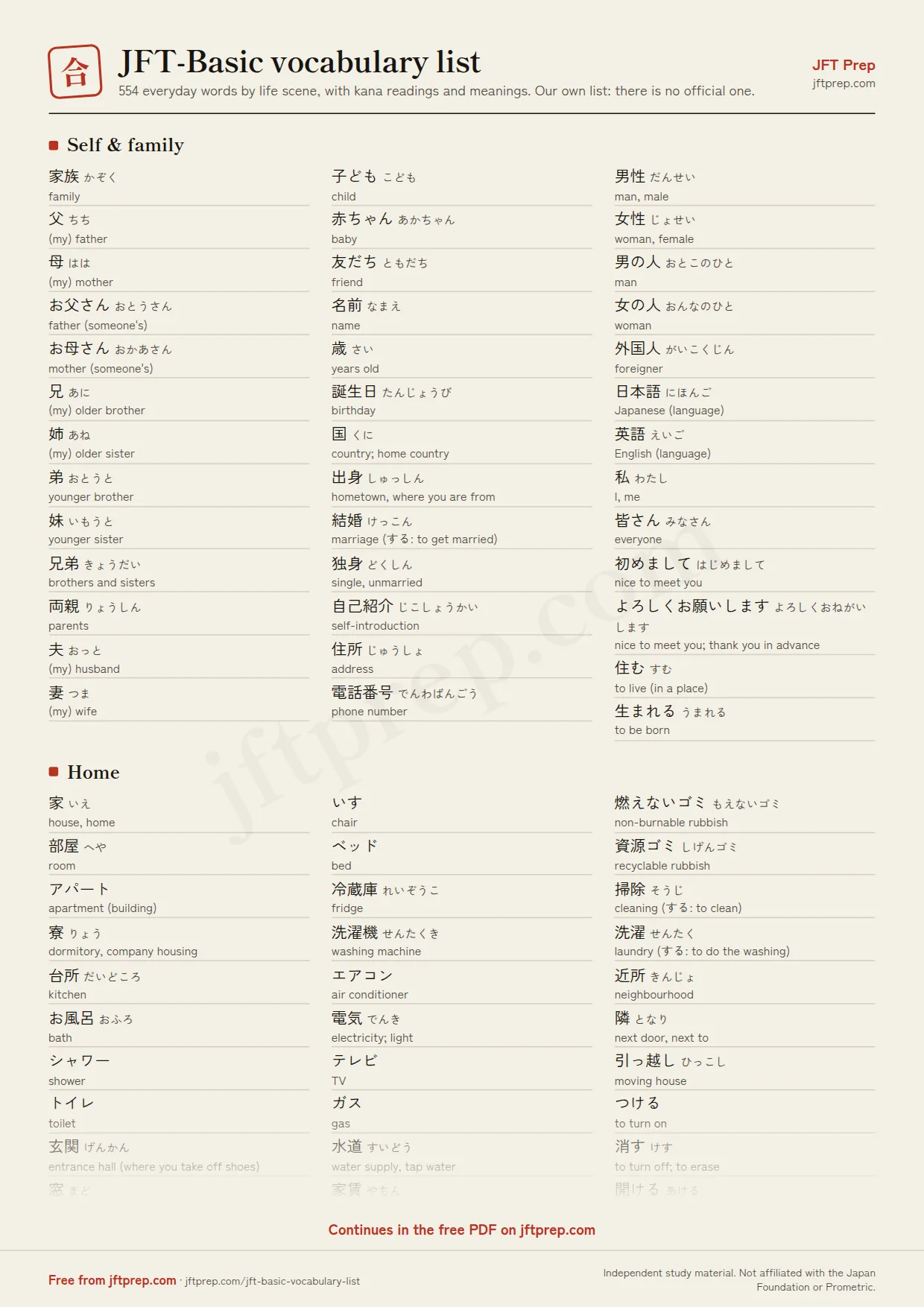
Free PDF cheat sheet
JFT-Basic vocabulary list: 554 words by topic
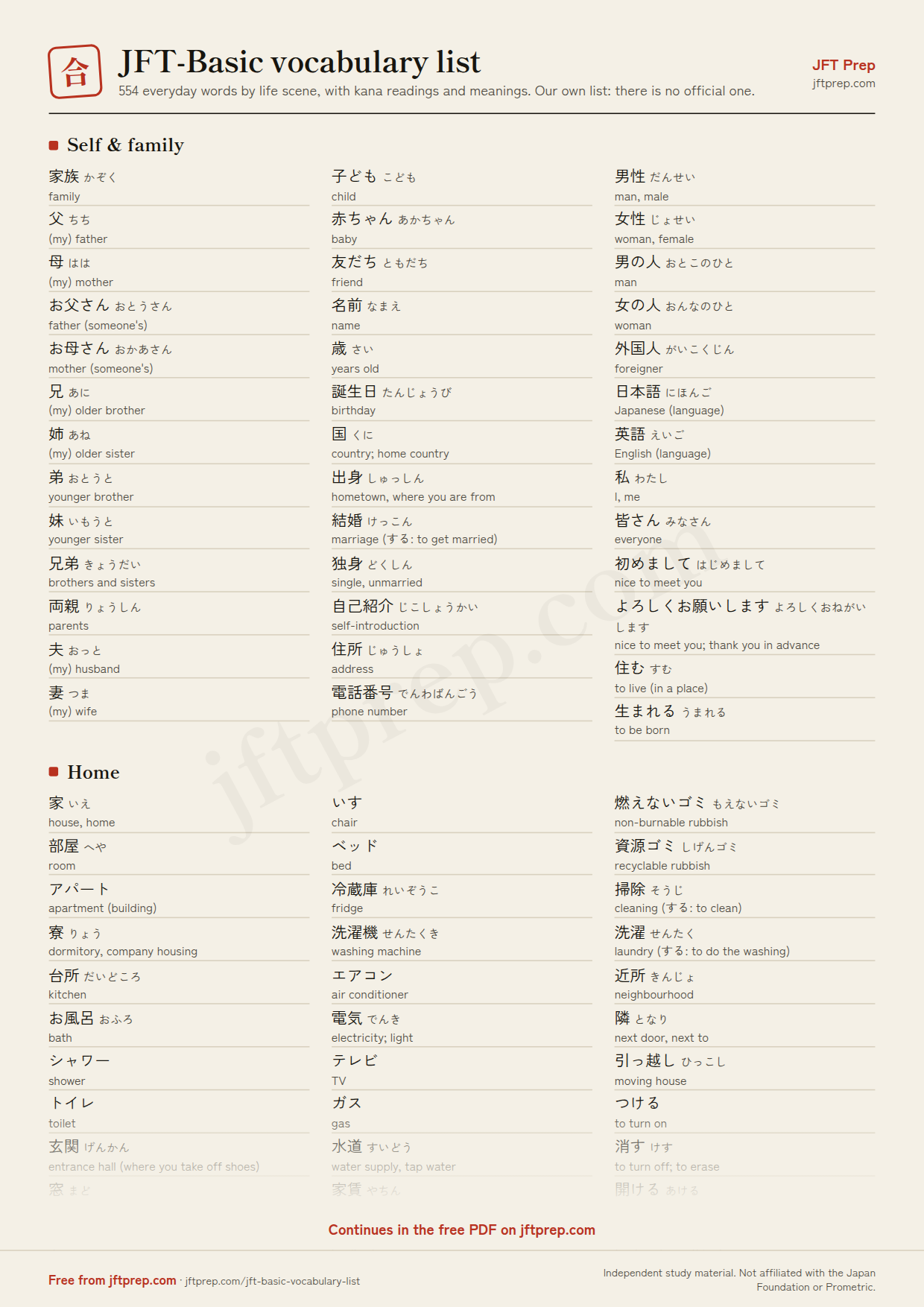
Free, no sign-up. Share it with your study group.
Updated Oct 31, 2026
How vocabulary is tested
Where vocabulary matters in JFT-Basic
The Script and Vocabulary section has about 12 questions, but words decide your score in every section. Listening and Reading are full of prices, times, places and instructions.
Word Meaning
You look at a picture, such as a person who looks tired or happy, and choose the matching word from three options.
Word Usage
A sentence has a gap, and three words of the same type fit the grammar. Only one makes sense, so you need to know how a word is used, not just its translation.
Listening
You hear short conversations and announcements, and each clip plays 2 times. A word you can read but don't recognise when spoken won't help, so learn every word with its sound.
Reading
Notices, menus, schedules and messages use everyday words like 休憩, 予約, 燃えるゴミ and 遅れる. Topic lists make scanning them much faster.
What's in the list
14 topics, matched to life in Japan
JFT-Basic questions are set in everyday scenes that don't depend on any particular job. The topics follow those scenes, so the words you learn are the ones you'll actually hear and read.
Self & family39 words
家族・父・母・お父さん
Home37 words
家・部屋・アパート・寮
Food & eating out41 words
ご飯・朝ご飯・昼ご飯・晩ご飯
Shopping & money39 words
店・コンビニ・スーパー・デパート
Town & directions39 words
町・道・右・左
Transport39 words
駅・電車・バス・バス停
Health & hospital36 words
病院・医者・看護師・薬
Weather & seasons32 words
天気・天気予報・晴れ・曇り
Time & dates43 words
今日・明日・昨日・毎日
Work39 words
仕事・会社・工場・上司
Safety & rules37 words
安全・危ない・危険・注意
Hobbies & free time34 words
趣味・休みの日・音楽・歌
Feelings & adjectives48 words
うれしい・楽しい・悲しい・寂しい
Common verbs51 words
行く・来る・帰る・食べる
How to use this list
Learn JFT vocabulary that sticks
One topic at a time
Choose a topic, listen to each word and say it aloud. Words learned in a situation, like the station or the clinic, are easier to remember.
Fifteen cards a day
Set a daily goal of 10 to 30 cards. The flashcards bring each word back just before you'd forget it. At fifteen new words a day, this whole list takes about six weeks.
Test, then fix
Run the quick test for the topic you studied. Put the words you miss back in your flashcards. Kanji in these words are covered in our JFT kanji list.
Use the words in questions
Practise with the vocabulary drills on our section practice page, then check your level with the free JFT-Basic practice test.
FAQ
Frequently asked questions
- JFT-Basic kanji listThe kanji the test expects, by topic, with readings and a quick quiz.
- JFT-Basic vocabulary and kanjiThe words, kanji and set phrases that come up again and again, grouped by daily-life topic.
- Section practiceDrill one section at a time: script and vocabulary, conversation and expression, listening, reading.
- Hiragana and katakana quizA fast reading drill for both scripts, with your weakest characters brought back first.
Step 1 · 15 minutes
Hear these words in real test questions.
Take the free 12-question JFT-Basic practice test, with vocabulary, listening and reading in the real format and an instant level estimate.
Free. No account needed. Your result stays on this device.