Free tool · Kanji list and quiz
JFT Basic kanji list with readings, quiz and PDF
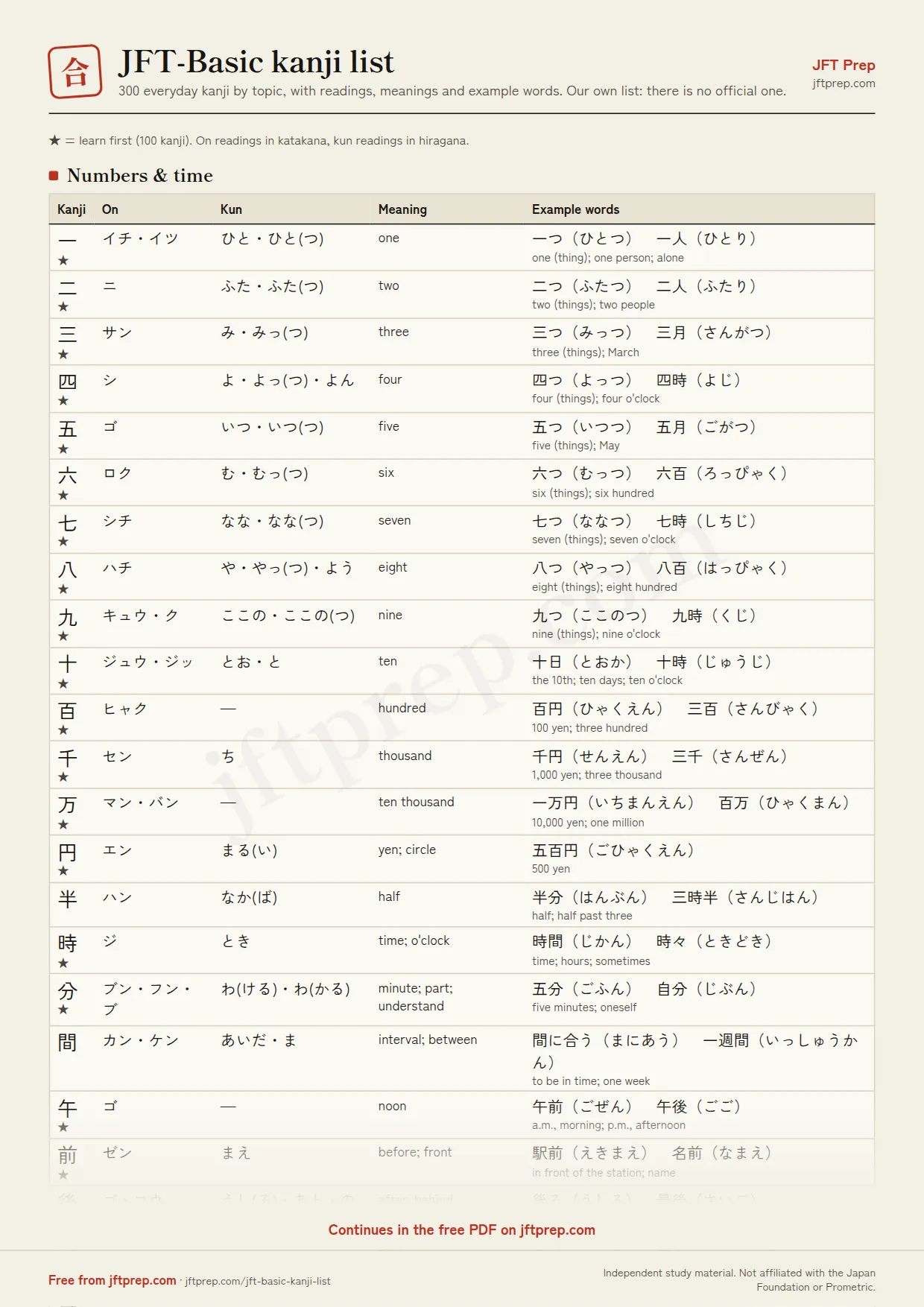
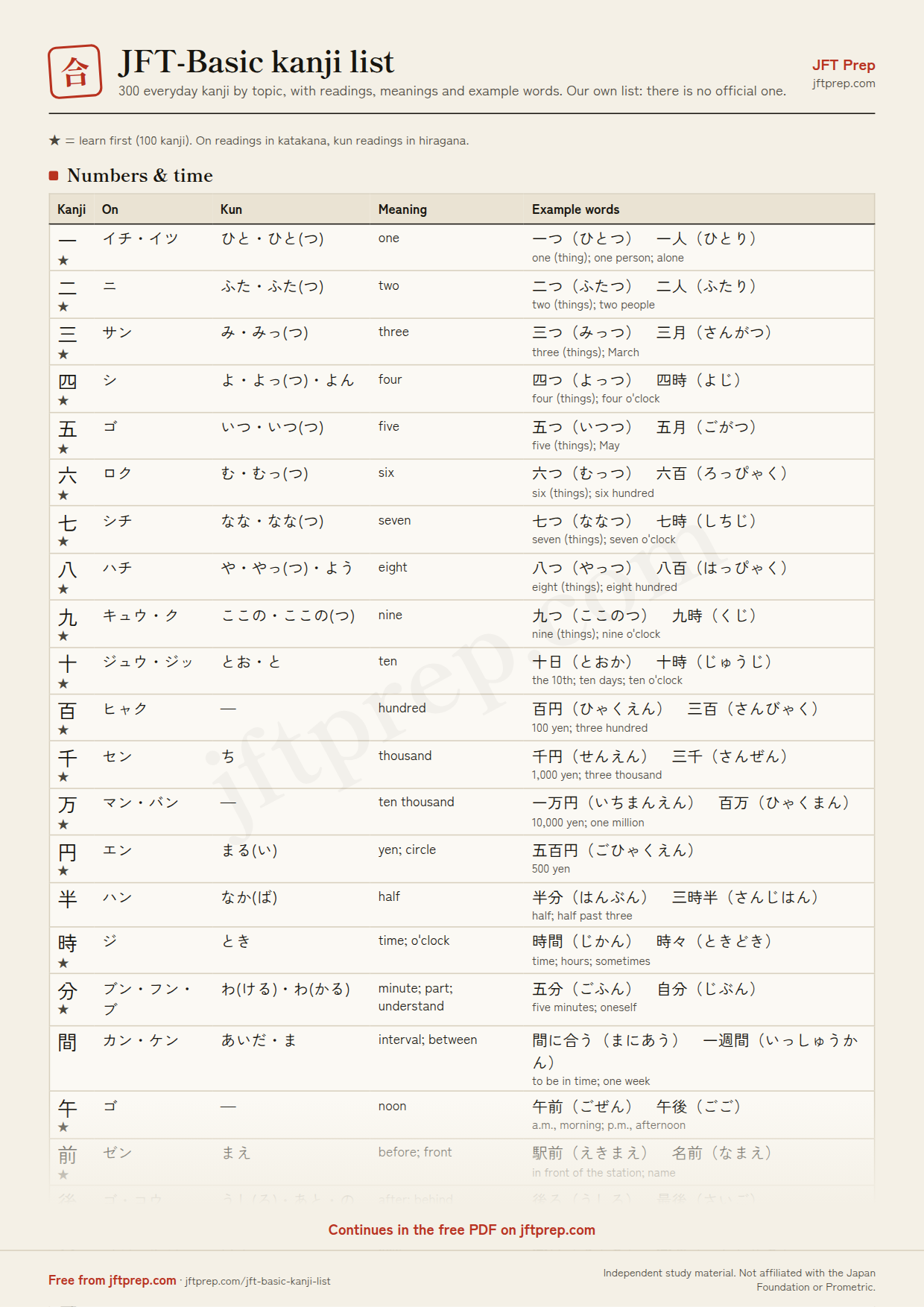
This JFT Basic kanji list has the 300 kanji you'll meet most in daily life in Japan and in JFT-style questions, grouped by topic, with readings and example words. Filter it, hide the readings to test yourself, take a 10-question kanji quiz, or print it as a PDF. It's our own list, not an official one.
Showing 300 of 300 kanji
Numbers & time 38
- 一Essential: learn this first
one
- On
- イチ・イツ
- Kun
- ひと・ひと(つ)
- 一つひとつ· one (thing)
- 一人ひとり· one person; alone
- 二Essential: learn this first
two
- On
- ニ
- Kun
- ふた・ふた(つ)
- 二つふたつ· two (things)
- 二人ふたり· two people
- 三Essential: learn this first
three
- On
- サン
- Kun
- み・みっ(つ)
- 三つみっつ· three (things)
- 三月さんがつ· March
- 四Essential: learn this first
four
- On
- シ
- Kun
- よ・よっ(つ)・よん
- 四つよっつ· four (things)
- 四時よじ· four o'clock
- 五Essential: learn this first
five
- On
- ゴ
- Kun
- いつ・いつ(つ)
- 五ついつつ· five (things)
- 五月ごがつ· May
- 六Essential: learn this first
six
- On
- ロク
- Kun
- む・むっ(つ)
- 六つむっつ· six (things)
- 六百ろっぴゃく· six hundred
- 七Essential: learn this first
seven
- On
- シチ
- Kun
- なな・なな(つ)
- 七つななつ· seven (things)
- 七時しちじ· seven o'clock
- 八Essential: learn this first
eight
- On
- ハチ
- Kun
- や・やっ(つ)・よう
- 八つやっつ· eight (things)
- 八百はっぴゃく· eight hundred
- 九Essential: learn this first
nine
- On
- キュウ・ク
- Kun
- ここの・ここの(つ)
- 九つここのつ· nine (things)
- 九時くじ· nine o'clock
- 十Essential: learn this first
ten
- On
- ジュウ・ジッ
- Kun
- とお・と
- 十日とおか· the 10th; ten days
- 十時じゅうじ· ten o'clock
- 百Essential: learn this first
hundred
- On
- ヒャク
- 百円ひゃくえん· 100 yen
- 三百さんびゃく· three hundred
- 千Essential: learn this first
thousand
- On
- セン
- Kun
- ち
- 千円せんえん· 1,000 yen
- 三千さんぜん· three thousand
- 万Essential: learn this first
ten thousand
- On
- マン・バン
- 一万円いちまんえん· 10,000 yen
- 百万ひゃくまん· one million
- 円Essential: learn this first
yen; circle
- On
- エン
- Kun
- まる(い)
- 五百円ごひゃくえん· 500 yen
- 半
half
- On
- ハン
- Kun
- なか(ば)
- 半分はんぶん· half
- 三時半さんじはん· half past three
- 時Essential: learn this first
time; o'clock
- On
- ジ
- Kun
- とき
- 時間じかん· time; hours
- 時々ときどき· sometimes
- 分Essential: learn this first
minute; part; understand
- On
- ブン・フン・ブ
- Kun
- わ(ける)・わ(かる)
- 五分ごふん· five minutes
- 自分じぶん· oneself
- 間
interval; between
- On
- カン・ケン
- Kun
- あいだ・ま
- 間に合うまにあう· to be in time
- 一週間いっしゅうかん· one week
- 午Essential: learn this first
noon
- On
- ゴ
- 午前ごぜん· a.m., morning
- 午後ごご· p.m., afternoon
- 前Essential: learn this first
before; front
- On
- ゼン
- Kun
- まえ
- 駅前えきまえ· in front of the station
- 名前なまえ· name
- 後Essential: learn this first
after; behind
- On
- ゴ・コウ
- Kun
- うし(ろ)・あと・のち
- 後ろうしろ· behind
- 最後さいご· last, final
- 今Essential: learn this first
now
- On
- コン・キン
- Kun
- いま
- 今日きょう· today
- 今週こんしゅう· this week
- 毎Essential: learn this first
every
- On
- マイ
- 毎日まいにち· every day
- 毎朝まいあさ· every morning
- 日Essential: learn this first
day; sun
- On
- ニチ・ジツ
- Kun
- ひ・か
- 日曜日にちようび· Sunday
- 三日みっか· the 3rd; three days
- 月Essential: learn this first
month; moon
- On
- ゲツ・ガツ
- Kun
- つき
- 月曜日げつようび· Monday
- 一月いちがつ· January
- 年Essential: learn this first
year
- On
- ネン
- Kun
- とし
- 今年ことし· this year
- 来年らいねん· next year
- 週Essential: learn this first
week
- On
- シュウ
- 週末しゅうまつ· weekend
- 来週らいしゅう· next week
- 曜
day of the week
- On
- ヨウ
- 曜日ようび· day of the week
- 土曜日どようび· Saturday
- 朝Essential: learn this first
morning
- On
- チョウ
- Kun
- あさ
- 朝ご飯あさごはん· breakfast
- 今朝けさ· this morning
- 昼
noon; daytime
- On
- チュウ
- Kun
- ひる
- 昼休みひるやすみ· lunch break
- 昼ご飯ひるごはん· lunch
- 夜
night
- On
- ヤ
- Kun
- よ・よる
- 今夜こんや· tonight
- 夜中よなか· middle of the night
- 夕
evening
- On
- セキ
- Kun
- ゆう
- 夕方ゆうがた· early evening
- 夕飯ゆうはん· dinner
- 先
previous; ahead
- On
- セン
- Kun
- さき
- 先週せんしゅう· last week
- 先生せんせい· teacher
- 去
past; leave
- On
- キョ・コ
- Kun
- さ(る)
- 去年きょねん· last year
- 何Essential: learn this first
what
- On
- カ
- Kun
- なに・なん
- 何時なんじ· what time
- 何人なんにん· how many people
- 回
times; turn
- On
- カイ・エ
- Kun
- まわ(る)・まわ(す)
- 一回いっかい· once
- 今回こんかい· this time
- 番
number; turn
- On
- バン
- 番号ばんごう· number
- 一番いちばん· number one; the most
- 号
number; issue
- On
- ゴウ
- 電話番号でんわばんごう· phone number
- 信号しんごう· traffic light
People & body 36
- 人Essential: learn this first
person
- On
- ジン・ニン
- Kun
- ひと
- 日本人にほんじん· Japanese person
- 三人さんにん· three people
- 男Essential: learn this first
man
- On
- ダン・ナン
- Kun
- おとこ
- 男の人おとこのひと· man
- 男性だんせい· male, man
- 女Essential: learn this first
woman
- On
- ジョ・ニョ
- Kun
- おんな・め
- 女の人おんなのひと· woman
- 女性じょせい· female, woman
- 子Essential: learn this first
child
- On
- シ・ス
- Kun
- こ
- 子どもこども· child
- 女の子おんなのこ· girl
- 父
father
- On
- フ
- Kun
- ちち
- お父さんおとうさん· father
- 父ちち· my father
- 母
mother
- On
- ボ
- Kun
- はは
- お母さんおかあさん· mother
- 母はは· my mother
- 兄
older brother
- On
- ケイ・キョウ
- Kun
- あに
- お兄さんおにいさん· older brother
- 兄あに· my older brother
- 姉
older sister
- On
- シ
- Kun
- あね
- お姉さんおねえさん· older sister
- 姉あね· my older sister
- 弟
younger brother
- On
- テイ・ダイ・デ
- Kun
- おとうと
- 弟おとうと· younger brother
- 兄弟きょうだい· siblings
- 妹
younger sister
- On
- マイ
- Kun
- いもうと
- 妹いもうと· younger sister
- 家Essential: learn this first
house; family
- On
- カ・ケ
- Kun
- いえ・や
- 家族かぞく· family
- 家いえ· house, home
- 友Essential: learn this first
friend
- On
- ユウ
- Kun
- とも
- 友だちともだち· friend
- 友人ゆうじん· friend (formal)
- 私
I; private
- On
- シ
- Kun
- わたし・わたくし
- 私わたし· I, me
- 私たちわたしたち· we
- 名Essential: learn this first
name
- On
- メイ・ミョウ
- Kun
- な
- 名前なまえ· name
- 有名ゆうめい· famous
- 生
life; birth; raw
- On
- セイ・ショウ
- Kun
- い(きる)・う(まれる)・なま
- 学生がくせい· student
- 生まれるうまれる· to be born
- 自
self
- On
- ジ・シ
- Kun
- みずか(ら)
- 自分じぶん· oneself
- 自転車じてんしゃ· bicycle
- 体
body
- On
- タイ・テイ
- Kun
- からだ
- 体からだ· body
- 体重たいじゅう· body weight
- 頭
head
- On
- トウ・ズ
- Kun
- あたま
- 頭あたま· head
- 頭痛ずつう· headache
- 顔
face
- On
- ガン
- Kun
- かお
- 顔かお· face
- 笑顔えがお· smile
- 目
eye
- On
- モク・ボク
- Kun
- め
- 目め· eye
- 一つ目ひとつめ· the first (one)
- 耳
ear
- On
- ジ
- Kun
- みみ
- 耳みみ· ear
- 口Essential: learn this first
mouth; opening
- On
- コウ・ク
- Kun
- くち
- 口くち· mouth
- 人口じんこう· population
- 手Essential: learn this first
hand
- On
- シュ
- Kun
- て
- 手て· hand
- 切手きって· postage stamp
- 足Essential: learn this first
foot, leg; be enough
- On
- ソク
- Kun
- あし・た(りる)
- 足あし· foot, leg
- 足りるたりる· to be enough
- 歯
tooth
- On
- シ
- Kun
- は
- 歯は· tooth
- 歯医者はいしゃ· dentist
- 心
heart, mind
- On
- シン
- Kun
- こころ
- 心配しんぱい· worry
- 安心あんしん· relief, peace of mind
- 病
illness
- On
- ビョウ
- Kun
- や(む)・やまい
- 病気びょうき· illness
- 病院びょういん· hospital, clinic
- 気Essential: learn this first
spirit; air; feeling
- On
- キ・ケ
- 気分きぶん· feeling, mood
- 元気げんき· healthy, well
- 元
origin
- On
- ゲン・ガン
- Kun
- もと
- 元気げんき· healthy, well
- 地元じもと· hometown, local area
- 医
medicine; doctor
- On
- イ
- 医者いしゃ· doctor
- 医学いがく· medicine (the field)
- 者
person (suffix)
- On
- シャ
- Kun
- もの
- 若者わかもの· young people
- 医者いしゃ· doctor
- 薬
medicine
- On
- ヤク
- Kun
- くすり
- 薬くすり· medicine
- 薬局やっきょく· pharmacy
- 熱
heat; fever
- On
- ネツ
- Kun
- あつ(い)
- 熱ねつ· fever; heat
- 熱いあつい· hot (to the touch)
- 痛
pain
- On
- ツウ
- Kun
- いた(い)・いた(む)
- 痛いいたい· painful, it hurts
- 頭痛ずつう· headache
- 様
Mr/Ms (polite); manner
- On
- ヨウ
- Kun
- さま
- お客様おきゃくさま· customer (polite)
- 皆様みなさま· everyone (polite)
- 方
direction; person (polite); way
- On
- ホウ
- Kun
- かた
- あの方あのかた· that person (polite)
- 読み方よみかた· how to read
Places & town 32
- 町
town
- On
- チョウ
- Kun
- まち
- 町まち· town
- 町内ちょうない· in the town, neighbourhood
- 市
city; market
- On
- シ
- Kun
- いち
- 市役所しやくしょ· city hall
- 市民しみん· citizen
- 国
country
- On
- コク
- Kun
- くに
- 外国がいこく· foreign country
- 国くに· country; home country
- 外Essential: learn this first
outside; other
- On
- ガイ・ゲ
- Kun
- そと・ほか
- 外国人がいこくじん· foreigner
- 外そと· outside
- 内
inside
- On
- ナイ
- Kun
- うち
- 案内あんない· guidance, information
- 国内こくない· domestic
- 中Essential: learn this first
middle; inside
- On
- チュウ
- Kun
- なか
- 中なか· inside
- 営業中えいぎょうちゅう· open (for business)
- 上Essential: learn this first
up; above
- On
- ジョウ
- Kun
- うえ・あ(がる)・のぼ(る)
- 上うえ· above, on top
- 上司じょうし· boss, supervisor
- 下Essential: learn this first
down; below
- On
- カ・ゲ
- Kun
- した・さ(がる)・くだ(さる)・お(りる)
- 下した· below, under
- 地下ちか· underground, basement
- 右Essential: learn this first
right
- On
- ウ・ユウ
- Kun
- みぎ
- 右みぎ· right
- 右側みぎがわ· right-hand side
- 左Essential: learn this first
left
- On
- サ
- Kun
- ひだり
- 左ひだり· left
- 左側ひだりがわ· left-hand side
- 東
east
- On
- トウ
- Kun
- ひがし
- 東口ひがしぐち· east exit
- 東京とうきょう· Tokyo
- 西
west
- On
- セイ・サイ
- Kun
- にし
- 西口にしぐち· west exit
- 関西かんさい· the Kansai region
- 南
south
- On
- ナン
- Kun
- みなみ
- 南口みなみぐち· south exit
- 北
north
- On
- ホク
- Kun
- きた
- 北口きたぐち· north exit
- 北海道ほっかいどう· Hokkaido
- 近Essential: learn this first
near
- On
- キン
- Kun
- ちか(い)
- 近くちかく· nearby
- 近所きんじょ· neighbourhood
- 所Essential: learn this first
place
- On
- ショ
- Kun
- ところ
- 住所じゅうしょ· address
- 台所だいどころ· kitchen
- 場
place
- On
- ジョウ
- Kun
- ば
- 場所ばしょ· place
- 会場かいじょう· venue
- 屋
shop; roof
- On
- オク
- Kun
- や
- 部屋へや· room
- 本屋ほんや· bookshop
- 部
part; section
- On
- ブ
- 全部ぜんぶ· all, everything
- 部長ぶちょう· department head
- 室
room
- On
- シツ
- Kun
- むろ
- 教室きょうしつ· classroom
- 会議室かいぎしつ· meeting room
- 階
floor, storey
- On
- カイ
- 二階にかい· second floor
- 階段かいだん· stairs
- 局
office, bureau
- On
- キョク
- 郵便局ゆうびんきょく· post office
- 薬局やっきょく· pharmacy
- 銀
silver
- On
- ギン
- 銀行ぎんこう· bank
- 館
building, hall
- On
- カン
- Kun
- やかた
- 図書館としょかん· library
- 大使館たいしかん· embassy
- 図
map; drawing
- On
- ズ・ト
- Kun
- はか(る)
- 地図ちず· map
- 図書館としょかん· library
- 地
ground; land
- On
- チ・ジ
- 地震じしん· earthquake
- 地下鉄ちかてつ· subway
- 公
public
- On
- コウ
- Kun
- おおやけ
- 公園こうえん· park
- 園
garden
- On
- エン
- Kun
- その
- 動物園どうぶつえん· zoo
- 公園こうえん· park
- 学Essential: learn this first
study
- On
- ガク
- Kun
- まな(ぶ)
- 学校がっこう· school
- 大学だいがく· university
- 校
school
- On
- コウ
- 高校こうこう· high school
- 小学校しょうがっこう· elementary school
- 住
live, reside
- On
- ジュウ
- Kun
- す(む)
- 住むすむ· to live
- 住所じゅうしょ· address
- 隣
next to
- On
- リン
- Kun
- となり
- 隣となり· next to, next door
Transport 25
- 駅Essential: learn this first
station
- On
- エキ
- 駅えき· station
- 駅員えきいん· station staff
- 電Essential: learn this first
electricity
- On
- デン
- 電車でんしゃ· train
- 電話でんわ· telephone
- 車Essential: learn this first
car, vehicle
- On
- シャ
- Kun
- くるま
- 車くるま· car
- 駐車場ちゅうしゃじょう· car park
- 道
road, way
- On
- ドウ・トウ
- Kun
- みち
- 道みち· road, way
- 歩道ほどう· pavement, sidewalk
- 線
line
- On
- セン
- 一番線いちばんせん· platform 1
- 新幹線しんかんせん· bullet train
- 乗Essential: learn this first
ride
- On
- ジョウ
- Kun
- の(る)・の(せる)
- 乗るのる· to ride, get on
- 乗り換えのりかえ· change of trains, transfer
- 降Essential: learn this first
get off; fall (rain)
- On
- コウ
- Kun
- お(りる)・ふ(る)
- 降りるおりる· to get off
- 降るふる· to fall (rain, snow)
- 発
depart; emit
- On
- ハツ・ホツ
- 出発しゅっぱつ· departure
- 発車はっしゃ· departure (of a train or bus)
- 着
arrive; wear
- On
- チャク
- Kun
- き(る)・つ(く)
- 着くつく· to arrive
- 到着とうちゃく· arrival
- 急
hurry; sudden
- On
- キュウ
- Kun
- いそ(ぐ)
- 急行きゅうこう· express (train)
- 急ぐいそぐ· to hurry
- 特
special
- On
- トク
- 特急とっきゅう· limited express
- 特にとくに· especially
- 通
pass; commute
- On
- ツウ
- Kun
- とお(る)・かよ(う)
- 通るとおる· to pass through
- 通うかよう· to commute, attend
- 転
turn; roll
- On
- テン
- Kun
- ころ(ぶ)
- 運転うんてん· driving
- 自転車じてんしゃ· bicycle
- 運
carry; luck
- On
- ウン
- Kun
- はこ(ぶ)
- 運ぶはこぶ· to carry
- 運賃うんちん· fare
- 空
sky; empty
- On
- クウ
- Kun
- そら・あ(く)・から
- 空港くうこう· airport
- 空そら· sky
- 飛
fly
- On
- ヒ
- Kun
- と(ぶ)
- 飛行機ひこうき· airplane
- 機
machine
- On
- キ
- Kun
- はた
- 券売機けんばいき· ticket machine
- 機械きかい· machine
- 券
ticket
- On
- ケン
- 乗車券じょうしゃけん· passenger ticket
- 食券しょっけん· meal ticket
- 符
token, sign
- On
- フ
- 切符きっぷ· ticket
- 信
trust; signal
- On
- シン
- 信号しんごう· traffic light
- 交
mix; cross
- On
- コウ
- Kun
- まじ(わる)
- 交番こうばん· police box
- 交通こうつう· traffic
- 停
stop
- On
- テイ
- バス停バスてい· bus stop
- 停車ていしゃ· stopping (of a train)
- 駐
stay, park
- On
- チュウ
- 駐輪場ちゅうりんじょう· bicycle parking
- 遅
late, slow
- On
- チ
- Kun
- おく(れる)・おそ(い)
- 遅れるおくれる· to be late, delayed
- 遅いおそい· slow; late
- 席
seat
- On
- セキ
- 席せき· seat
- 指定席していせき· reserved seat
Food & shopping 31
- 食Essential: learn this first
eat; food
- On
- ショク
- Kun
- た(べる)
- 食べるたべる· to eat
- 食堂しょくどう· canteen
- 飲Essential: learn this first
drink
- On
- イン
- Kun
- の(む)
- 飲むのむ· to drink
- 飲み物のみもの· drink
- 飯
meal; cooked rice
- On
- ハン
- Kun
- めし
- ご飯ごはん· cooked rice; meal
- 米
rice (uncooked)
- On
- ベイ・マイ
- Kun
- こめ
- 米こめ· rice (uncooked)
- 肉Essential: learn this first
meat
- On
- ニク
- 肉にく· meat
- 牛肉ぎゅうにく· beef
- 魚
fish
- On
- ギョ
- Kun
- さかな・うお
- 魚さかな· fish
- 焼き魚やきざかな· grilled fish
- 牛
cow
- On
- ギュウ
- Kun
- うし
- 牛乳ぎゅうにゅう· milk
- 牛うし· cow
- 豚
pig
- On
- トン
- Kun
- ぶた
- 豚肉ぶたにく· pork
- 鶏
chicken
- On
- ケイ
- Kun
- にわとり
- 鶏肉とりにく· chicken (meat)
- 卵
egg
- On
- ラン
- Kun
- たまご
- 卵たまご· egg
- 生卵なまたまご· raw egg
- 野
field
- On
- ヤ
- Kun
- の
- 野菜やさい· vegetables
- 野球やきゅう· baseball
- 茶
tea
- On
- チャ・サ
- お茶おちゃ· (green) tea
- 喫茶店きっさてん· café
- 酒
alcohol
- On
- シュ
- Kun
- さけ
- お酒おさけ· alcohol; sake
- 日本酒にほんしゅ· sake
- 味
taste
- On
- ミ
- Kun
- あじ
- 味あじ· taste
- 意味いみ· meaning
- 物Essential: learn this first
thing
- On
- ブツ・モツ
- Kun
- もの
- 買い物かいもの· shopping
- 食べ物たべもの· food
- 品
goods
- On
- ヒン
- Kun
- しな
- 商品しょうひん· product, goods
- 食品しょくひん· food products
- 料Essential: learn this first
fee; materials
- On
- リョウ
- 料金りょうきん· fee, charge
- 料理りょうり· cooking; dish
- 金Essential: learn this first
money; gold
- On
- キン・コン
- Kun
- かね
- お金おかね· money
- 金曜日きんようび· Friday
- 買Essential: learn this first
buy
- On
- バイ
- Kun
- か(う)
- 買うかう· to buy
- 売
sell
- On
- バイ
- Kun
- う(る)
- 売り場うりば· sales floor, section
- 売るうる· to sell
- 税
tax
- On
- ゼイ
- 税込ぜいこみ· tax included
- 税金ぜいきん· tax
- 割
divide; rate
- On
- カツ
- Kun
- わ(る)・わり
- 割引わりびき· discount
- 割るわる· to break; to divide
- 袋
bag
- On
- タイ
- Kun
- ふくろ
- 袋ふくろ· bag
- レジ袋レジぶくろ· plastic shopping bag
- 個
piece
- On
- コ
- 一個いっこ· one (small item)
- 個人こじん· individual
- 本
book; origin; long-thing counter
- On
- ホン
- Kun
- もと
- 本ほん· book
- 一本いっぽん· one (long item)
- 枚
flat-thing counter
- On
- マイ
- 一枚いちまい· one (flat item)
- 二枚にまい· two (flat items)
- 焼
grill, bake
- On
- ショウ
- Kun
- や(く)
- 焼くやく· to grill, bake
- 焼き鳥やきとり· grilled chicken skewers
- 弁
speech; valve
- On
- ベン
- 弁当べんとう· boxed meal
- 当
hit; this
- On
- トウ
- Kun
- あ(たる)
- 本当ほんとう· true, real
- 担当たんとう· person in charge
- 計
measure
- On
- ケイ
- Kun
- はか(る)
- 会計かいけい· bill, paying
- 時計とけい· clock, watch
- 店Essential: learn this first
shop
- On
- テン
- Kun
- みせ
- 店みせ· shop
- 店員てんいん· shop staff
Work & safety 27
- 仕Essential: learn this first
serve
- On
- シ・ジ
- Kun
- つか(える)
- 仕事しごと· work, job
- 事Essential: learn this first
thing, matter
- On
- ジ・ズ
- Kun
- こと
- 火事かじ· fire
- 食事しょくじ· meal
- 社Essential: learn this first
company; shrine
- On
- シャ
- Kun
- やしろ
- 会社かいしゃ· company
- 社員しゃいん· employee
- 員
member
- On
- イン
- 会社員かいしゃいん· office worker
- 店員てんいん· shop staff
- 働
work
- On
- ドウ
- Kun
- はたら(く)
- 働くはたらく· to work
- 労働ろうどう· labour
- 工Essential: learn this first
craft; construction
- On
- コウ・ク
- 工場こうじょう· factory
- 工事こうじ· construction work
- 業
business; industry
- On
- ギョウ・ゴウ
- Kun
- わざ
- 残業ざんぎょう· overtime
- 作業さぎょう· work, task
- 残
remain
- On
- ザン
- Kun
- のこ(る)
- 残るのこる· to remain
- 残念ざんねん· too bad, a pity
- 休Essential: learn this first
rest
- On
- キュウ
- Kun
- やす(む)
- 休みやすみ· day off; break
- 休憩きゅうけい· break, rest
- 給
salary; supply
- On
- キュウ
- 給料きゅうりょう· pay, salary
- 時給じきゅう· hourly wage
- 司
administer
- On
- シ
- 上司じょうし· boss, supervisor
- 長
long; chief
- On
- チョウ
- Kun
- なが(い)
- 社長しゃちょう· company president
- 長いながい· long
- 予Essential: learn this first
beforehand
- On
- ヨ
- 予定よてい· plan, schedule
- 予約よやく· reservation, appointment
- 定
fix, decide
- On
- テイ・ジョウ
- Kun
- さだ(める)
- 定休日ていきゅうび· regular closing day
- 予定よてい· plan, schedule
- 約
promise; approximately
- On
- ヤク
- 約束やくそく· promise, plans
- 連
connect; take along
- On
- レン
- Kun
- つ(れる)
- 連絡れんらく· contact, getting in touch
- 連休れんきゅう· consecutive holidays
- 全Essential: learn this first
whole, all
- On
- ゼン
- Kun
- まった(く)・すべ(て)
- 安全あんぜん· safety
- 全部ぜんぶ· all, everything
- 危Essential: learn this first
danger
- On
- キ
- Kun
- あぶ(ない)・あや(うい)
- 危ないあぶない· dangerous
- 危険きけん· danger
- 険
steep; risky
- On
- ケン
- Kun
- けわ(しい)
- 保険ほけん· insurance
- 保
keep, protect
- On
- ホ
- Kun
- たも(つ)
- 保険証ほけんしょう· health insurance card
- 注Essential: learn this first
pour; note
- On
- チュウ
- Kun
- そそ(ぐ)
- 注意ちゅうい· caution, care
- 注文ちゅうもん· order
- 故
accident; reason
- On
- コ
- Kun
- ゆえ
- 事故じこ· accident
- 故障中こしょうちゅう· out of order
- 避
avoid
- On
- ヒ
- Kun
- さ(ける)
- 避難ひなん· evacuation
- 避難所ひなんじょ· evacuation shelter
- 難
difficult
- On
- ナン
- Kun
- むずか(しい)
- 難しいむずかしい· difficult
- 防
prevent
- On
- ボウ
- Kun
- ふせ(ぐ)
- 防災ぼうさい· disaster prevention
- 消防しょうぼう· fire fighting
- 消
put out; disappear
- On
- ショウ
- Kun
- け(す)・き(える)
- 消すけす· to turn off; to erase
- 消火器しょうかき· fire extinguisher
- 服
clothes
- On
- フク
- 制服せいふく· uniform
- 服ふく· clothes
Signs & notices 26
- 入Essential: learn this first
enter
- On
- ニュウ
- Kun
- い(る)・い(れる)・はい(る)
- 入口いりぐち· entrance
- 入るはいる· to enter
- 出Essential: learn this first
exit; go out
- On
- シュツ
- Kun
- で(る)・だ(す)
- 出口でぐち· exit
- 出るでる· to go out, leave
- 非
non-, un-
- On
- ヒ
- 非常口ひじょうぐち· emergency exit
- 禁Essential: learn this first
prohibit
- On
- キン
- 禁止きんし· prohibited
- 禁煙きんえん· no smoking
- 煙
smoke
- On
- エン
- Kun
- けむり・けむ(い)
- 煙けむり· smoke
- 止Essential: learn this first
stop
- On
- シ
- Kun
- と(まる)・と(める)
- 止まるとまる· to stop
- 中止ちゅうし· cancellation
- 立
stand
- On
- リツ
- Kun
- た(つ)・た(てる)
- 立入禁止たちいりきんし· no entry
- 立つたつ· to stand
- 押Essential: learn this first
push
- On
- オウ
- Kun
- お(す)
- 押すおす· to push
- 引Essential: learn this first
pull
- On
- イン
- Kun
- ひ(く)
- 引くひく· to pull
- 開Essential: learn this first
open
- On
- カイ
- Kun
- ひら(く)・あ(く)・あ(ける)
- 開くあく· to open (by itself)
- 開店かいてん· opening (of a shop)
- 閉Essential: learn this first
close
- On
- ヘイ
- Kun
- し(める)・と(じる)
- 閉めるしめる· to close (something)
- 閉店へいてん· closing (of a shop)
- 営
run (a business)
- On
- エイ
- Kun
- いとな(む)
- 営業時間えいぎょうじかん· business hours
- 準
standard; prepare
- On
- ジュン
- 準備中じゅんびちゅう· closed (getting ready to open)
- 準備じゅんび· preparation
- 受
receive
- On
- ジュ
- Kun
- う(ける)
- 受付うけつけ· reception
- 受けるうける· to take (a test)
- 付
attach
- On
- フ
- Kun
- つ(ける)・つ(く)
- 付けるつける· to attach; to switch on
- 案
plan; idea
- On
- アン
- 案内所あんないじょ· information desk
- 洗Essential: learn this first
wash
- On
- セン
- Kun
- あら(う)
- お手洗いおてあらい· toilet
- 洗うあらう· to wash
- 便
convenience; mail
- On
- ベン・ビン
- Kun
- たよ(り)
- 便利べんり· convenient
- 郵便ゆうびん· mail, post
- 無Essential: learn this first
none; without
- On
- ム・ブ
- Kun
- な(い)
- 無料むりょう· free of charge
- 有
have; exist
- On
- ユウ・ウ
- Kun
- あ(る)
- 有料ゆうりょう· paid, charged
- 満
full
- On
- マン
- Kun
- み(ちる)
- 満車まんしゃ· full (car park)
- 満員まんいん· full (of people)
- 込
crowded; include
- Kun
- こ(む)・こ(める)
- 込むこむ· to be crowded
- 申し込みもうしこみ· application
- 段
step
- On
- ダン
- 階段かいだん· stairs
- 利
benefit; use
- On
- リ
- Kun
- き(く)
- 利用りよう· use
- 用
use; errand
- On
- ヨウ
- Kun
- もち(いる)
- 使用中しようちゅう· in use, occupied
- 用事ようじ· errand
- 燃
burn
- On
- ネン
- Kun
- も(える)・も(やす)
- 燃えるゴミもえるゴミ· burnable rubbish
Verbs 35
- 行Essential: learn this first
go; carry out
- On
- コウ・ギョウ
- Kun
- い(く)・おこな(う)
- 行くいく· to go
- 銀行ぎんこう· bank
- 来Essential: learn this first
come; next
- On
- ライ
- Kun
- く(る)
- 来るくる· to come
- 来月らいげつ· next month
- 帰Essential: learn this first
return home
- On
- キ
- Kun
- かえ(る)
- 帰るかえる· to go home
- 帰国きこく· returning to one's country
- 見Essential: learn this first
see
- On
- ケン
- Kun
- み(る)・み(せる)
- 見るみる· to see, watch
- 花見はなみ· cherry-blossom viewing
- 聞Essential: learn this first
hear; ask
- On
- ブン・モン
- Kun
- き(く)
- 聞くきく· to listen; to ask
- 新聞しんぶん· newspaper
- 言Essential: learn this first
say
- On
- ゲン・ゴン
- Kun
- い(う)・こと
- 言ういう· to say
- 言葉ことば· word, language
- 話Essential: learn this first
talk
- On
- ワ
- Kun
- はな(す)・はなし
- 話すはなす· to speak
- 電話でんわ· telephone
- 読
read
- On
- ドク
- Kun
- よ(む)
- 読むよむ· to read
- 書
write
- On
- ショ
- Kun
- か(く)
- 書くかく· to write
- 辞書じしょ· dictionary
- 待
wait
- On
- タイ
- Kun
- ま(つ)
- 待つまつ· to wait
- 待合室まちあいしつ· waiting room
- 持
hold
- On
- ジ
- Kun
- も(つ)
- 持つもつ· to hold, carry
- 気持ちきもち· feeling
- 使Essential: learn this first
use
- On
- シ
- Kun
- つか(う)
- 使うつかう· to use
- 作
make
- On
- サク・サ
- Kun
- つく(る)
- 作るつくる· to make
- 起
get up; wake
- On
- キ
- Kun
- お(きる)・お(こす)
- 起きるおきる· to get up
- 寝
sleep
- On
- シン
- Kun
- ね(る)
- 寝るねる· to sleep, go to bed
- 始
begin
- On
- シ
- Kun
- はじ(める)・はじ(まる)
- 始まるはじまる· to begin
- 終
end
- On
- シュウ
- Kun
- お(わる)・お(える)
- 終わるおわる· to end
- 終電しゅうでん· last train
- 知
know
- On
- チ
- Kun
- し(る)
- 知るしる· to know
- お知らせおしらせ· notice, announcement
- 教
teach
- On
- キョウ
- Kun
- おし(える)
- 教えるおしえる· to teach, tell
- 習
learn
- On
- シュウ
- Kun
- なら(う)
- 習うならう· to learn
- 練習れんしゅう· practice
- 覚
remember; wake
- On
- カク
- Kun
- おぼ(える)・さ(める)
- 覚えるおぼえる· to remember, memorise
- 思
think
- On
- シ
- Kun
- おも(う)
- 思うおもう· to think
- 考
think, consider
- On
- コウ
- Kun
- かんが(える)
- 考えるかんがえる· to think, consider
- 歩
walk
- On
- ホ・ブ
- Kun
- ある(く)
- 歩くあるく· to walk
- 散歩さんぽ· a walk
- 走
run
- On
- ソウ
- Kun
- はし(る)
- 走るはしる· to run
- 送
send
- On
- ソウ
- Kun
- おく(る)
- 送るおくる· to send
- 送料そうりょう· postage, shipping fee
- 返
return (something)
- On
- ヘン
- Kun
- かえ(す)
- 返すかえす· to give back
- 返事へんじ· reply
- 借
borrow
- On
- シャク
- Kun
- か(りる)
- 借りるかりる· to borrow
- 貸
lend
- On
- タイ
- Kun
- か(す)
- 貸すかす· to lend
- 払
pay
- On
- フツ
- Kun
- はら(う)
- 払うはらう· to pay
- 支払いしはらい· payment
- 切
cut
- On
- セツ・サイ
- Kun
- き(る)
- 切るきる· to cut
- 大切たいせつ· important
- 会Essential: learn this first
meet
- On
- カイ・エ
- Kun
- あ(う)
- 会うあう· to meet
- 会議かいぎ· meeting
- 置
put, place
- On
- チ
- Kun
- お(く)
- 置くおく· to put, place
- 置き場おきば· storage area
- 動
move
- On
- ドウ
- Kun
- うご(く)
- 動くうごく· to move; to work (a machine)
- 自動じどう· automatic
- 集
gather
- On
- シュウ
- Kun
- あつ(める)・あつ(まる)
- 集めるあつめる· to collect
- 集合しゅうごう· gathering, meeting up
Adjectives 31
- 大Essential: learn this first
big
- On
- ダイ・タイ
- Kun
- おお(きい)
- 大きいおおきい· big
- 大学だいがく· university
- 小Essential: learn this first
small
- On
- ショウ
- Kun
- ちい(さい)・こ
- 小さいちいさい· small
- 高Essential: learn this first
high; expensive
- On
- コウ
- Kun
- たか(い)
- 高いたかい· expensive; tall, high
- 安Essential: learn this first
cheap; peaceful
- On
- アン
- Kun
- やす(い)
- 安いやすい· cheap
- 安心あんしん· relief, peace of mind
- 新Essential: learn this first
new
- On
- シン
- Kun
- あたら(しい)
- 新しいあたらしい· new
- 古
old
- On
- コ
- Kun
- ふる(い)
- 古いふるい· old (things)
- 中古ちゅうこ· second-hand
- 短
short
- On
- タン
- Kun
- みじか(い)
- 短いみじかい· short
- 多
many
- On
- タ
- Kun
- おお(い)
- 多いおおい· many, a lot
- 多分たぶん· probably
- 少
few, a little
- On
- ショウ
- Kun
- すく(ない)・すこ(し)
- 少しすこし· a little
- 少ないすくない· few
- 早
early
- On
- ソウ
- Kun
- はや(い)
- 早いはやい· early
- 早退そうたい· leaving (work) early
- 遠
far
- On
- エン
- Kun
- とお(い)
- 遠いとおい· far
- 重
heavy
- On
- ジュウ・チョウ
- Kun
- おも(い)
- 重いおもい· heavy
- 暑
hot (weather)
- On
- ショ
- Kun
- あつ(い)
- 暑いあつい· hot (weather)
- 寒
cold (weather)
- On
- カン
- Kun
- さむ(い)
- 寒いさむい· cold (weather)
- 冷
cold (to the touch)
- On
- レイ
- Kun
- つめ(たい)・ひ(える)
- 冷たいつめたい· cold (to the touch)
- 冷蔵庫れいぞうこ· fridge
- 明
bright
- On
- メイ・ミョウ
- Kun
- あか(るい)・あ(ける)
- 明るいあかるい· bright; cheerful
- 説明せつめい· explanation
- 暗
dark
- On
- アン
- Kun
- くら(い)
- 暗いくらい· dark
- 広
wide
- On
- コウ
- Kun
- ひろ(い)
- 広いひろい· wide, spacious
- 白
white
- On
- ハク・ビャク
- Kun
- しろ(い)
- 白いしろい· white
- 黒
black
- On
- コク
- Kun
- くろ(い)
- 黒いくろい· black
- 赤
red
- On
- セキ
- Kun
- あか(い)
- 赤いあかい· red
- 赤ちゃんあかちゃん· baby
- 青
blue
- On
- セイ
- Kun
- あお(い)
- 青いあおい· blue
- 青信号あおしんごう· green (go) light
- 色
colour
- On
- ショク・シキ
- Kun
- いろ
- 色いろ· colour
- 黄色きいろ· yellow
- 好
like
- On
- コウ
- Kun
- す(き)・この(む)
- 好きすき· to like
- 大好きだいすき· to love
- 楽
fun; easy; music
- On
- ガク・ラク
- Kun
- たの(しい)
- 楽しいたのしい· fun, enjoyable
- 音楽おんがく· music
- 甘
sweet
- On
- カン
- Kun
- あま(い)
- 甘いあまい· sweet
- 辛
spicy; hard
- On
- シン
- Kun
- から(い)・つら(い)
- 辛いからい· spicy, hot
- 悪
bad
- On
- アク
- Kun
- わる(い)
- 悪いわるい· bad
- 良
good
- On
- リョウ
- Kun
- よ(い)
- 良いよい· good
- 不良品ふりょうひん· defective product
- 忙
busy
- On
- ボウ
- Kun
- いそが(しい)
- 忙しいいそがしい· busy
- 静
quiet
- On
- セイ・ジョウ
- Kun
- しず(か)
- 静かしずか· quiet
Nature & weather 19
- 天Essential: learn this first
heaven, sky
- On
- テン
- Kun
- あめ・あま
- 天気てんき· weather
- 天気予報てんきよほう· weather forecast
- 雨Essential: learn this first
rain
- On
- ウ
- Kun
- あめ・あま
- 雨あめ· rain
- 大雨おおあめ· heavy rain
- 雪
snow
- On
- セツ
- Kun
- ゆき
- 雪ゆき· snow
- 風Essential: learn this first
wind
- On
- フウ・フ
- Kun
- かぜ
- 台風たいふう· typhoon
- 風かぜ· wind
- 晴
clear up
- On
- セイ
- Kun
- は(れる)
- 晴れはれ· sunny, clear
- 台
stand; platform
- On
- ダイ・タイ
- 台所だいどころ· kitchen
- 一台いちだい· one (machine or vehicle)
- 山
mountain
- On
- サン
- Kun
- やま
- 山やま· mountain
- 富士山ふじさん· Mt Fuji
- 川
river
- On
- セン
- Kun
- かわ
- 川かわ· river
- 海
sea
- On
- カイ
- Kun
- うみ
- 海うみ· sea
- 海外かいがい· overseas
- 花
flower
- On
- カ
- Kun
- はな
- 花はな· flower
- 花火はなび· fireworks
- 木Essential: learn this first
tree; Thursday
- On
- モク・ボク
- Kun
- き
- 木曜日もくようび· Thursday
- 木き· tree
- 水Essential: learn this first
water; Wednesday
- On
- スイ
- Kun
- みず
- 水曜日すいようび· Wednesday
- 水みず· water
- 火Essential: learn this first
fire; Tuesday
- On
- カ
- Kun
- ひ
- 火曜日かようび· Tuesday
- 火ひ· fire
- 土Essential: learn this first
soil; Saturday
- On
- ド・ト
- Kun
- つち
- 土つち· soil, earth
- 土日どにち· Saturday and Sunday
- 春
spring
- On
- シュン
- Kun
- はる
- 春はる· spring
- 春休みはるやすみ· spring holiday
- 夏
summer
- On
- カ・ゲ
- Kun
- なつ
- 夏なつ· summer
- 夏休みなつやすみ· summer holiday
- 秋
autumn
- On
- シュウ
- Kun
- あき
- 秋あき· autumn
- 冬
winter
- On
- トウ
- Kun
- ふゆ
- 冬ふゆ· winter
- 震
shake
- On
- シン
- Kun
- ふる(える)
- 震度しんど· seismic intensity (earthquake scale)
Free PDF
Print it or save it to your phone
Free PDF cheat sheet
JFT-Basic kanji list: 300 kanji by topic
Free, no sign-up. Share it with your study group.
Updated Oct 31, 2026
How kanji is tested
Where kanji shows up in JFT-Basic
Kanji is tested directly in the first section, Script and Vocabulary, which has about 12 questions. It also matters in Reading, where notices, menus and timetables use everyday kanji.
Kanji Reading
A short sentence with one kanji word underlined. You pick its hiragana reading from three options that look alike, such as こうじょう, こじょう and ごうじょう.
Kanji Meaning and Usage
A sentence with a gap and three kanji words. You choose the one whose meaning fits, so you need to recognise what common words mean.
Reading section
Signs, notices and leaflets use real-life kanji like 営業時間, 無料, 禁止 and 受付. If you know the words on this list, you can scan for the information you need.
No handwriting
JFT-Basic is a computer-based multiple-choice test. You need to recognise kanji and know their readings, not write them by hand.
The “450 kanji” question
How many kanji do you need for JFT-Basic?
There is no official number. The Japan Foundation does not publish a kanji list for JFT-Basic, so lists called “JFT kanji 450” or “all JFT kanji” are made by schools and websites, not by the test maker.
The closest thing to a guide is the Japan Foundation's own coursebook, Irodori, which the test recommends. Its Starter, Elementary 1 and Elementary 2 books teach 429 kanji in total. They teach them as everyday words, about ten per lesson, and the goal is to understand and type them, not to handwrite them.
This list keeps the 300 kanji that come up most in daily-life situations: dates and times, prices, stations, shops, work and signs. Start with the 100 marked essential, then add a topic at a time. Learn them as whole words with their sounds, and pair this list with our vocabulary and kanji guide.
How to use this list
A simple routine for learning JFT kanji
Kana first
Make sure you can read hiragana and katakana quickly. Every reading here is in kana. Check yourself with the hiragana and katakana quiz.
Ten a day
Pick one topic and learn about ten kanji a day as words, saying each word aloud. At ten a day, the whole list takes about a month.
Hide the readings
Turn off “Show readings” and read the example words from memory. Then run the quiz, which brings back your misses first.
Use them in questions
Kanji only count when you can read them in context. Take the free JFT-Basic practice test to see them in real-format questions.
FAQ
Frequently asked questions
- JFT-Basic vocabulary listEveryday and work words by topic, with audio and flashcards.
- JFT-Basic vocabulary and kanjiThe words, kanji and set phrases that come up again and again, grouped by daily-life topic.
- Hiragana and katakana quizA fast reading drill for both scripts, with your weakest characters brought back first.
- Section practiceDrill one section at a time: script and vocabulary, conversation and expression, listening, reading.
Step 1 · 15 minutes
Read these kanji in real test questions.
Take the free 12-question JFT-Basic practice test, with kanji, listening and reading in the real format and an instant level estimate.
Free. No account needed. Your result stays on this device.