Is there an official JFT-Basic vocabulary list?
No. The Japan Foundation does not publish a vocabulary list or a kanji list for JFT-Basic. Any site that calls its list "official" is wrong.
What the Japan Foundation does publish is the basis of the test: the JF Can-do for Life in Japan, 381 statements of what people can do in Japanese at A1 and A2 ("I can buy a ticket", "I can understand a notice at work"), and the Irodori coursebook, which teaches the words for those tasks. So the best way to choose vocabulary is by situation.
The lists on this page are our own. We chose common, everyday A1–A2 words for each topic and checked every reading. They are not copied from Irodori or any official list, and they are a starting point, not a complete syllabus. Work through Irodori for the full picture (see the study plan).
To study and test yourself on longer lists, use our free JFT-Basic vocabulary list (by topic, with audio and flashcards) and the JFT-Basic kanji list (with readings and a quick quiz).
How vocabulary and kanji are tested
The first section, Script and Vocabulary (文字と語彙), has about 12 questions in four categories:
| Category | What it checks |
|---|---|
| Word Meaning | Do you know what a word means in context? |
| Word Usage | Can you choose the word that fits a sentence or situation? |
| Kanji Reading | Can you choose the correct hiragana reading of a kanji word? |
| Kanji Meaning and Usage | Do you understand a kanji word you see in daily life, such as on a sign? |
But vocabulary decides your score in every section. In Listening, you hear prices, times and places. In Reading, you scan notices, menus and schedules. A word you can read but not recognise when spoken won't help you in Listening, so learn each word with its sound.
Before kanji: hiragana and katakana
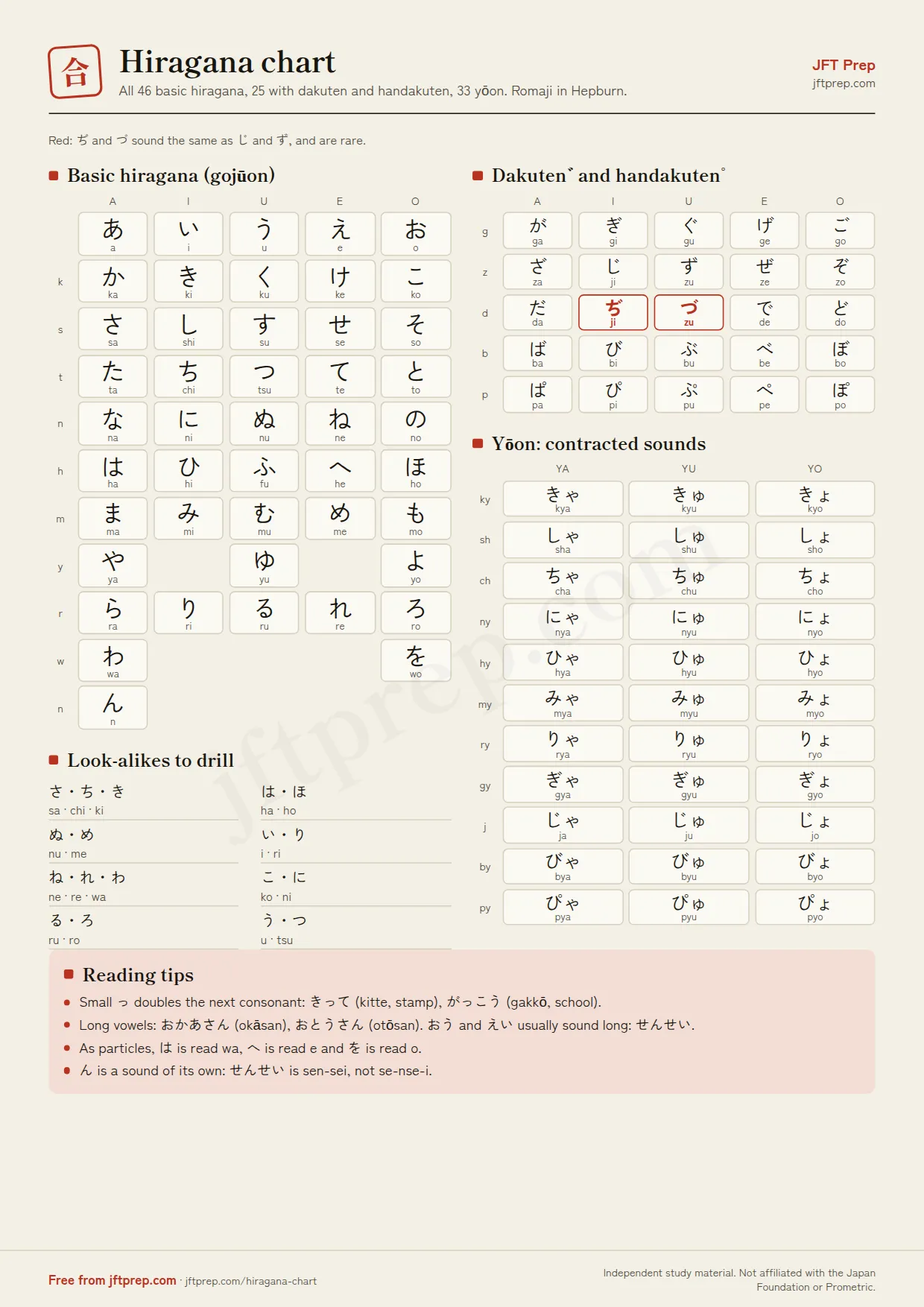
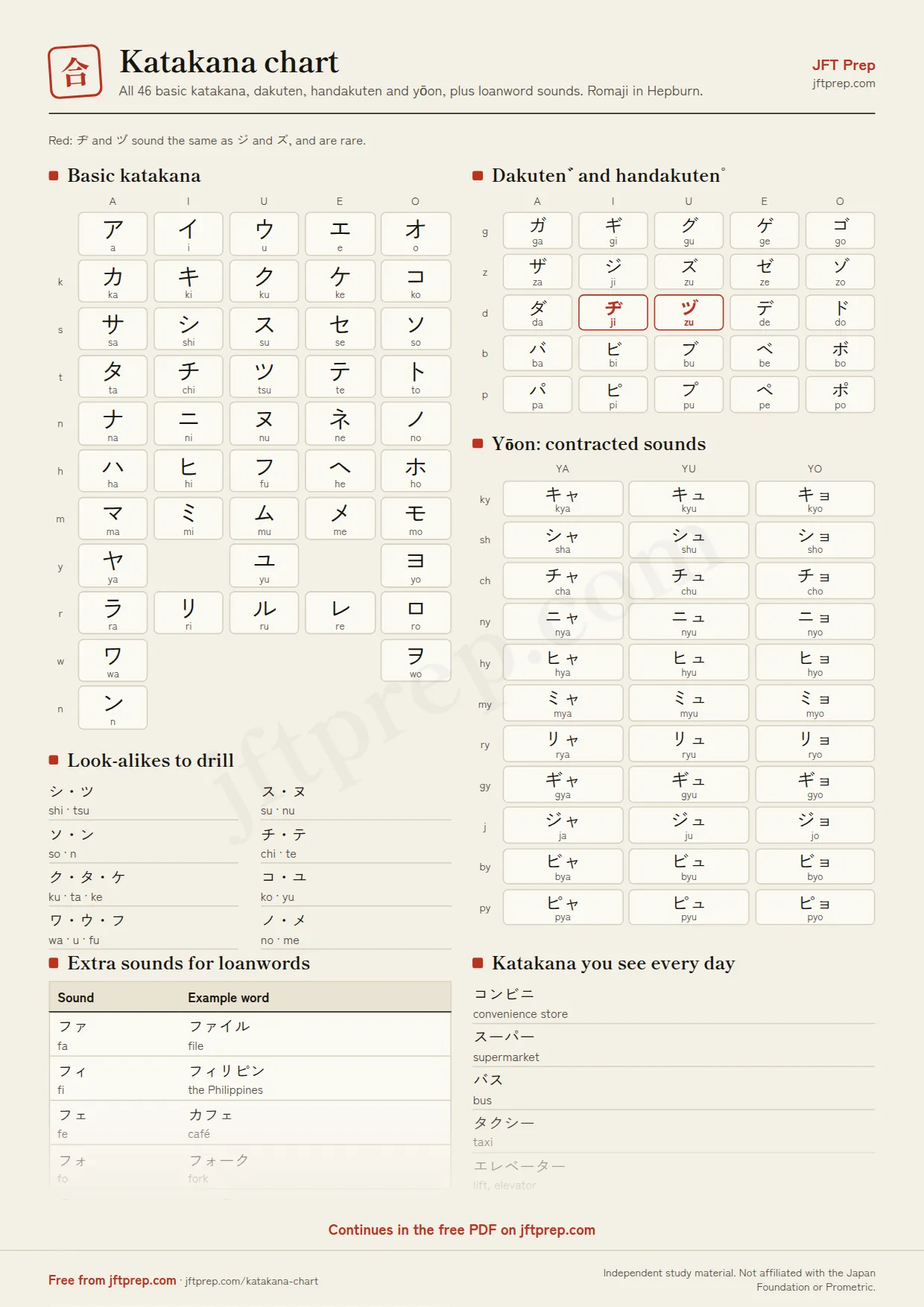
Every question is in Japanese script, and many daily-life words are written in katakana: レシート (receipt), コンビニ (convenience store), シフト (work shift). If you still hesitate over シ and ツ, or ソ and ン, fix that first with our hiragana and katakana quiz.
Time, dates and the calendar
You need these to read schedules, shift rosters and appointment cards, and to catch times in Listening.
Days of the week
| Word | Reading | Meaning |
|---|---|---|
| 月曜日 | げつようび | Monday |
| 火曜日 | かようび | Tuesday |
| 水曜日 | すいようび | Wednesday |
| 木曜日 | もくようび | Thursday |
| 金曜日 | きんようび | Friday |
| 土曜日 | どようび | Saturday |
| 日曜日 | にちようび | Sunday |
Time words
| Word | Reading | Meaning |
|---|---|---|
| 今日 | きょう | today |
| 明日 | あした | tomorrow |
| 昨日 | きのう | yesterday |
| 毎日 | まいにち | every day |
| 朝 | あさ | morning |
| 夜 | よる | night, evening |
| 午前 | ごぜん | a.m., morning |
| 午後 | ごご | p.m., afternoon |
| 週末 | しゅうまつ | weekend |
| 来週 | らいしゅう | next week |
| 休み | やすみ | day off, holiday, break |
Watch the irregular dates: 一日 (ついたち, 1st of the month), 二日 (ふつか, 2nd), 四日 (よっか, 4th), 八日 (ようか, 8th), 二十日 (はつか, 20th). They often appear in Listening.
Shopping and money
At the shop
| Word | Reading | Meaning |
|---|---|---|
| 店 | みせ | shop |
| 値段 | ねだん | price |
| 安い | やすい | cheap |
| 高い | たかい | expensive; tall, high |
| 円 | えん | yen |
| お金 | おかね | money |
| 現金 | げんきん | cash |
| 払う | はらう | to pay |
| 袋 | ふくろ | bag |
| 売り場 | うりば | sales floor, section of a shop |
| 割引 | わりびき | discount |
| 財布 | さいふ | wallet |
Numbers with sound changes are tested through prices: 三百 (さんびゃく, 300), 六百 (ろっぴゃく, 600), 八百 (はっぴゃく, 800), 三千 (さんぜん, 3,000) and 一万 (いちまん, 10,000).
Food and eating out
Food and restaurants
| Word | Reading | Meaning |
|---|---|---|
| ご飯 | ごはん | cooked rice; meal |
| 飲み物 | のみもの | drink |
| 水 | みず | water |
| 肉 | にく | meat |
| 魚 | さかな | fish |
| 野菜 | やさい | vegetables |
| 卵 | たまご | egg |
| 弁当 | べんとう | boxed meal |
| 注文 | ちゅうもん | order |
| 会計 | かいけい | bill, paying at the register |
| 辛い | からい | spicy, hot |
| 甘い | あまい | sweet |
Transport and directions
Getting around
| Word | Reading | Meaning |
|---|---|---|
| 駅 | えき | station |
| 電車 | でんしゃ | train |
| 切符 | きっぷ | ticket |
| 乗る | のる | to get on, to ride |
| 降りる | おりる | to get off |
| 乗り換え | のりかえ | change of trains, transfer |
| 次 | つぎ | next |
| 右 | みぎ | right |
| 左 | ひだり | left |
| まっすぐ | straight ahead | |
| 信号 | しんごう | traffic light |
| 角 | かど | corner |
| 自転車 | じてんしゃ | bicycle |
Station announcements are a classic Listening topic. Listen for 〜番線 (ばんせん, platform number), まもなく (soon, shortly) and 遅れています (おくれています, is delayed).
At work
Most JFT-Basic candidates are heading to a job, and the test includes workplace situations.
Workplace words
| Word | Reading | Meaning |
|---|---|---|
| 仕事 | しごと | work, job |
| 会社 | かいしゃ | company |
| 工場 | こうじょう | factory |
| 上司 | じょうし | boss, supervisor |
| 同僚 | どうりょう | co-worker |
| 休憩 | きゅうけい | break, rest |
| 残業 | ざんぎょう | overtime |
| 遅刻 | ちこく | being late |
| 給料 | きゅうりょう | pay, salary |
| 制服 | せいふく | uniform |
| 安全 | あんぜん | safety |
| 予定 | よてい | plan, schedule |
| 連絡 | れんらく | contact, getting in touch |
Set phrases at work
| Word | Reading | Meaning |
|---|---|---|
| お疲れ様です | おつかれさまです | greeting to colleagues (thanks for your hard work) |
| 失礼します | しつれいします | excuse me (entering or leaving a room) |
| よろしくお願いします | よろしくおねがいします | I look forward to working with you; please |
| すみません | excuse me; sorry | |
| 大丈夫です | だいじょうぶです | it's fine; I'm OK |
Health and the doctor
Health
| Word | Reading | Meaning |
|---|---|---|
| 病院 | びょういん | hospital, clinic |
| 医者 | いしゃ | doctor |
| 薬 | くすり | medicine |
| 熱 | ねつ | fever |
| 風邪 | かぜ | a cold |
| 頭 | あたま | head |
| お腹 | おなか | stomach |
| 痛い | いたい | painful, it hurts |
| けが | injury | |
| 保険証 | ほけんしょう | health insurance card |
| 救急車 | きゅうきゅうしゃ | ambulance |
Home and everyday life
Home and services
| Word | Reading | Meaning |
|---|---|---|
| 部屋 | へや | room |
| 家賃 | やちん | rent |
| 台所 | だいどころ | kitchen |
| 洗濯 | せんたく | laundry, washing |
| ゴミ | rubbish, garbage | |
| 燃えるゴミ | もえるゴミ | burnable rubbish |
| 住所 | じゅうしょ | address |
| 市役所 | しやくしょ | city hall |
| 郵便局 | ゆうびんきょく | post office |
| 銀行 | ぎんこう | bank |
| 近所 | きんじょ | neighbourhood |
Rubbish rules are a real-life reading task in Japan: notices say which day each type goes out, such as 燃えるゴミは月曜日と木曜日 (burnable rubbish on Mondays and Thursdays).
Weather and emergencies
Weather and safety
| Word | Reading | Meaning |
|---|---|---|
| 天気 | てんき | weather |
| 雨 | あめ | rain |
| 雪 | ゆき | snow |
| 晴れ | はれ | sunny, clear |
| 暑い | あつい | hot (weather) |
| 寒い | さむい | cold (weather) |
| 地震 | じしん | earthquake |
| 台風 | たいふう | typhoon |
| 火事 | かじ | fire |
| 避難 | ひなん | evacuation |
Kanji on signs
These are the kanji words you will see every day in Japan, on doors, machines and notices. They are ideal for Kanji Meaning and Usage questions and for the Reading section.
Signs and notices
| Word | Reading | Meaning |
|---|---|---|
| 入口 | いりぐち | entrance |
| 出口 | でぐち | exit |
| 非常口 | ひじょうぐち | emergency exit |
| お手洗い | おてあらい | toilet |
| 受付 | うけつけ | reception |
| 禁煙 | きんえん | no smoking |
| 危険 | きけん | danger |
| 立入禁止 | たちいりきんし | no entry |
| 押す | おす | push |
| 引く | ひく | pull |
| 営業中 | えいぎょうちゅう | open (for business) |
| 準備中 | じゅんびちゅう | closed (getting ready to open) |
| 故障中 | こしょうちゅう | out of order |
| 駐車場 | ちゅうしゃじょう | car park |
Notice the patterns. 中 (ちゅう) after a word means "in progress": open, preparing, broken. 禁 appears in "no smoking" and "no entry". Once you see these patterns, new signs become easier to guess.
Words that trap learners
- 高い means both "expensive" and "tall/high". Context decides.
- 辛い is からい (spicy) about food, but can also be read つらい (hard, painful) about feelings.
- 今日, 明日, 昨日 have special readings. Don't read them kanji by kanji.
- Long and short vowels change meaning: おばさん (aunt, middle-aged woman) and おばあさん (grandmother, elderly woman). Listen for the length.
- Small っ matters too: きて (come) vs きって (stamp).
How to learn these words well
- Fifteen words a day, six days a week, is about 1,000 words in twelve weeks.
- Learn with sound. Say each word aloud, and use Irodori's audio for the words in each lesson.
- Use spaced review. Review new words the next day, after three days and after a week.
- Test yourself in context with the Script and Vocabulary drills on our section practice page, then check your whole level with the free practice test.